
Bioretention Soil Mix vs Rain Garden Soil: Stormwater Specs
Need a specification-grade bioretention soil mix for your upcoming stormwater project? Request a custom blend quote with third-party testing and compliance documentation for NJDEP, NYSDEC, and NYCDEP standards.
When a civil engineer specifies "bioretention soil mix" on a stormwater plan, they are not asking for garden soil. They are calling for an engineered soil media formulated to meet strict drainage, filtration, and pollutant-removal standards set by state and municipal environmental agencies. Unlike standard rain garden soil sold at landscape supply yards, a specification-grade bioretention soil mix is a precisely controlled blend of sand, fines, and organic matter. Every batch must balance hydraulic conductivity with nutrient retention and pass third-party lab verification. For contractors and specifiers working under the NJ Green Infrastructure Mandate, NYC's Unified Stormwater Rule, or NYSDEC stormwater permits, using the wrong soil is not a small mistake. It is a compliance failure that can stall a project and trigger costly remediation. This guide compares engineered bioretention soil media against standard rain garden soil across the metrics that matter for tri-state stormwater projects.
What Is Bioretention Soil Mix?
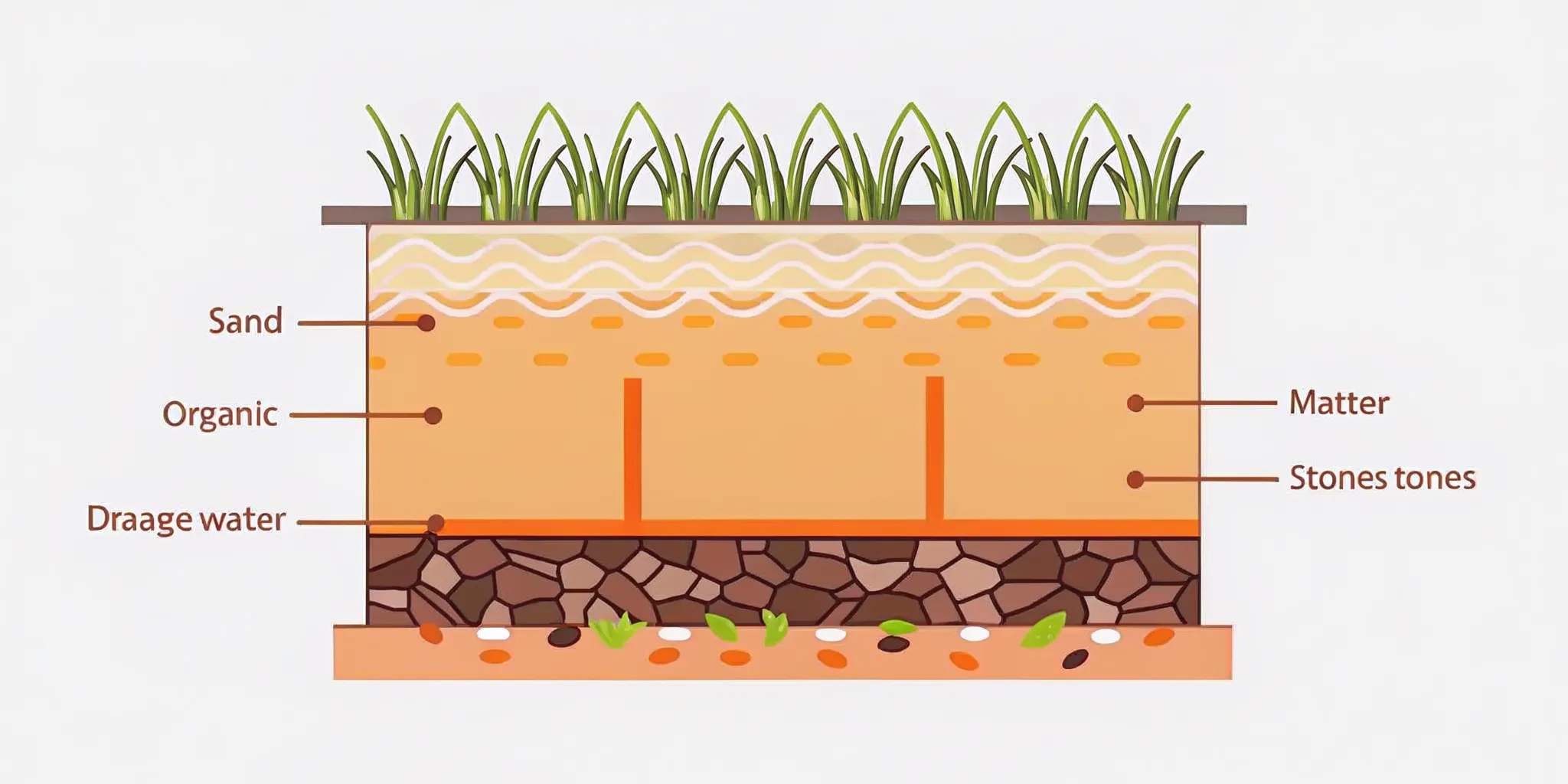
A bioretention soil mix is an engineered soil media designed to capture, filter, and slowly release stormwater runoff. Unlike standard rain garden soil, which is often a generic blend of compost and native soil, engineered bioretention media follows a strict recipe that controls sand content, fines, silt and clay, organic matter, and phosphorus levels. The goal is to achieve a specific infiltration rate, typically 1 to 6 inches per hour, while removing suspended solids, heavy metals, and excess nutrients from the water before it reaches the groundwater table.
The U.S. Environmental Protection Agency describes bioretention systems as "landscaped depressions that treat on-site stormwater discharge" through a mix of soil media, vegetation, and stone drainage layers. These systems mimic the natural hydrologic cycle. The soil media is the active filtration layer, and its composition directly determines whether the system performs as designed. Standard rain garden soil from a bulk supplier may drain too quickly, dry out plant roots, or leach phosphorus into groundwater. An engineered bioretention soil mix, by contrast, is blended and tested to meet the project's specific design criteria.
At Organic Recycling Inc., our bioretention soil is produced at NYSDEC-permitted facilities under controlled conditions. We blend concrete sand, screened compost, and topsoil in ratios that comply with NYSDOT, NJDOT, and NYCDEP specifications. Our production is supervised, and each batch is often retested to confirm the mix matches the engineer's design. This level of quality control is what separates engineered bioretention media from a generic landscape product.
How Does Engineered Bioretention Media Differ From Standard Rain Garden Soil?
The difference between a bioretention soil mix and a bag of rain garden soil comes down to engineering. Standard rain garden soil is typically a variable mix of native topsoil and compost with no controlled gradation. The sand content, organic matter percentage, and drainage rate shift from load to load. For a residential rain garden that is not subject to regulatory inspection, that variability is often acceptable. For a commercial stormwater project governed by a municipal separate storm sewer system (MS4) permit, variability is a liability.
An engineered bioretention soil mix, in contrast, is formulated to a precise sand-to-organic-matter ratio determined by the project's design engineer. The difference shows up in five critical areas:
- Drainage performance: Engineered media delivers a consistent hydraulic conductivity of 1 to 6 inches per hour. Standard rain garden soil can drain too fast or too slow.
- Pollutant removal: Controlled organic matter and phosphorus levels ensure the media captures heavy metals and excess nutrients. Standard soil without testing may leach phosphorus into groundwater.
- Batch consistency: Every cubic yard of engineered media matches the same spec. Standard rain garden soil varies with each delivery.
- Regulatory documentation: Engineered media arrives with third-party lab reports. Standard soil provides no compliance documentation.
- Plant health support: Proper aeration and moisture retention ratios keep vegetation healthy. Poorly balanced soil leads to plant die-off and system failure.
What Regulatory Standards Drive Bioretention Soil Specs in the Tri-State Area?
The demand for specification-grade bioretention soil mix in the tri-state area is not driven by preference. It is driven by regulation. Three major regulatory frameworks are reshaping how contractors and specifiers source soil for stormwater projects.
New Jersey's Green Infrastructure Mandate took effect in January 2026. The rule requires all new development and redevelopment projects to use green infrastructure best management practices (BMPs) for stormwater management. Bioretention systems are a primary BMP under this mandate, and the soil media used must meet NJDEP standards for hydraulic conductivity, phosphorus content, and organic matter. Off-the-shelf rain garden soil does not carry NJDEP compliance verification.
New York City's Unified Stormwater Rule consolidates stormwater requirements across DEP, DEC, and DOT. The rule enforces strict infiltration and water quality volume standards for projects citywide. Specifiers must document that the installed bioretention soil media meets the NYC DEP Stormwater Design Manual specifications. Third-party testing reports are typically required at the time of inspection.
NYSDEC permits under the SPDES general permit for stormwater discharges require that any bioretention system treating runoff from construction activity use soil media consistent with the New York State Stormwater Management Design Manual. This manual specifies soil composition ranges that differ from generic landscape blends.
Contractors who source a bioretention soil mix from a supplier without third-party testing and regulatory knowledge risk failing inspection and facing expensive rework. For a deeper look at what these specs entail, read our guide on bioretention soil specifications for stormwater compliance. You may also find our guide on engineered soil for commercial landscaping helpful for understanding how spec-grade soils move from design to delivery.
Need help matching your project to the right regulatory standard? Contact our spec team for guidance on NJDEP, NYSDEC, or NYCDEP compliance requirements.
What Sand-to-Organic-Matter Ratios Do the Specs Require?
Formulating a specification-grade bioretention soil mix requires more than dumping sand into compost. The ratio of mineral aggregate to organic matter determines whether the soil will filter pollutants, support healthy plant growth, and pass inspection. Here is how the process works for a typical tri-state stormwater project.
- Evaluate the project specifications. Start by reading the engineer's soil specification. Common tri-state standards include NYSDOT, NJDOT, NJDEP, NYCDEP, and NYC Parks. Each specifies a sand-to-organic-matter ratio range. For example, many NYSDOT dry swale specs call for 80 to 90 percent concrete sand and 10 to 20 percent organic compost by volume. NYC Parks planting pit specs may allow a higher organic fraction.
- Select the base aggregate. The base of any engineered bioretention soil mix is clean, washed concrete sand meeting ASTM C33 or equivalent gradation. Standard construction sand has a controlled particle size distribution that provides the drainage rate required for stormwater systems. The sand should have at least 55 percent coarse and medium sand particles and a maximum fine gravel content below 12 percent. Sand with too many fines will clog the system and slow drainage below the permitted rate.
- Calculate the organic matter percentage. Organic matter is typically 3 to 30 percent by volume, depending on the spec. The organic source is usually screened compost (leaf compost or a controlled green-waste compost) that meets particle size and stability requirements. Higher organic content improves moisture retention and plant growth but increases the risk of phosphorus leaching. For projects seeking phosphorus removal credits, the soil's phosphorus content must be below 30 mg/kg per the Mehlich III test, with a minimum of 12 mg/kg for plant health.
- Blend, test, and document. After blending, a representative sample is sent to a third-party laboratory. The lab tests sand gradation, organic matter percentage, pH, soluble salts, and hydraulic conductivity. The resulting report is the documentation the inspector will require at the job site. At Organic Recycling Inc., we oversee every batch and retain test records so contractors have a clear compliance trail. Our engineered soil media is produced under this controlled process.
The Minnesota Stormwater Manual compares six different bioretention soil mix types and documents the trade-offs. Mixes with some fines absorb more dissolved phosphorus and metals. Mixes with higher sand content drain faster and resist clogging but dry out quicker and are less forgiving for plant health. The right mix for a project depends on the specific design criteria, the local climate, and the regulatory standard being applied.
Third-Party Testing and Compliance Verification
The difference between a bioretention soil mix that passes inspection and one that fails often comes down to a lab report. Standard rain garden soil sold by the yard at a landscape supply center typically arrives with no laboratory data. An engineered bioretention soil mix from a specification-grade supplier arrives with a third-party test report that documents exactly what is in the blend.
Why does this matter for tri-state projects? Municipal and state inspectors increasingly require written proof that the installed soil media matches the approved design. For a project governed by NYSDEC's SPDES permit or a municipal separate storm sewer system (MS4) permit, the contractor must demonstrate that the soil meets the specified hydraulic conductivity range of 1 to 6 inches per hour. Standard rain garden soil, which is often a variable blend of compost and whatever sand or native soil is available, cannot reliably deliver that documented performance.
Organic Recycling Inc. regularly produces engineered bioretention soil that meets NYSDOT, NJDOT, NJDEP, NYCDEP, and NYC Parks specifications. The testing process at our NYSDEC-permitted facilities includes particle size analysis (sieve analysis per ASTM C136), organic matter content (loss on ignition), pH and soluble salts, and phosphorus content (Mehlich III). Each batch is produced under supervision and samples are sent to an independent lab before delivery. The results give the contractor and the specifier confidence that the installed media will perform as designed.
For projects where the specification requires ongoing quality assurance, batch-by-batch testing can be arranged. Our blending capacity ranges from 20 to 20,000 cubic yards, so even large projects receive consistent, tested material across the full order quantity. Learn more about our approach to quality soil products for specifications of any scale.
Why Custom Blending Matters for Large-Scale Projects
For a residential rain garden, a standard 60/40 soil-compost blend from a local nursery may be sufficient. For a commercial development, a municipal streetscape, or a DOT project, that same off-the-shelf product creates serious risk. The table below compares custom-engineered bioretention soil mix against standard rain garden soil across the criteria that matter for large-scale tri-state projects.
| Criterion | Custom Engineered Bioretention Soil Mix | Standard Rain Garden Soil |
|---|---|---|
| Compliance certifications | Meets NYSDOT, NJDOT, NJDEP, NYCDEP, NYC Parks specs | No certified compliance |
| Sand gradation control | ASTM C33 gradation; 60-80% coarse/medium sand | Variable; excessive fines possible |
| Organic matter consistency | Controlled 3-30% per design spec | Uncontrolled; 25-40% variable |
| Phosphorus content | Tested to 12-30 mg/kg Mehlich III | Not tested; leaching risk |
| Batch consistency | Every batch blended to spec and lab-tested | Batch-to-batch variation |
| Custom blend range | 20 to 20,000 cubic yards | Fixed formulation only |
| Third-party lab reports | Included with each batch | Not available |
| Project scale suitability | All scales | Small residential only |
As the table shows, custom blending is not a premium upgrade for projects that require regulatory compliance. It is the minimum technical requirement. When a municipal contract requires NJDEP-compliant bioretention media, standard rain garden soil cannot be substituted regardless of price. Custom engineered soil blending ensures that the delivered material matches the design spec, batch after batch, across the full project volume.
Choosing a Tri-State Supplier for Bioretention Soil Mix
Contractors and specifiers in the tri-state area must choose the right bulk partner for any bioretention project. Local and state rules require specific materials to control storm water. The right bioretention soil mix must filter pollutants while letting water drain at a steady rate. Buying from a supplier that owns permitted yards and specialized blending tools ensures your project stays on schedule and in compliance.
NYSDEC-Permitted Composting Facilities
You should verify that your vendor has valid state permits. Permitted facilities follow strict rules for green waste and soil safety. Under the New York State Department of Environmental Conservation, facilities must manage runoff and test materials. Working with a permitted partner prevents project delays from poor material quality.
Custom Blending and Testing Support
Bioretention soil mix needs precise ratios of sand, compost, and soil to meet local municipal specifications. You should look for a supplier with custom blending options from small loads of 20 cubic yards to bulk orders of 20,000 cubic yards. Ensure the supplier shares up-to-date, third-party lab test sheets.
Local Delivery Fleet and Service
Prompt delivery is vital to keep a site on track. A supplier with an owned fleet of trucks can schedule drop-offs with better care than third-party haulers. For projects in Northern New Jersey, Southern New York, or Western Connecticut, look for vendors with yards near major routes. Organic Recycling Inc. has served the tri-state area for over 40 years with two NYSDEC-permitted sites in Orangeburg and Goshen. They offer custom soils, fast delivery, and full landscape supplies for any job size.
Frequently Asked Questions
What is the difference between a bioretention soil mix and rain garden soil?
Standard rain garden soil is usually a simple topsoil blend that drains slowly. A technical bioretention soil mix is an engineered blend of clean sand, organic compost, and soil. It must meet exact drainage rates and sand-to-compost ratios to satisfy local stormwater compliance rules.
What are the NYSDOT specifications for a bioretention soil mix?
According to the New York State Department of Transportation. The standard specification for bioretention soil requires a mix of roughly 80 to 90 percent sand and 10 to 20 percent organic compost by volume. The final blend must be free of stones, weeds, and toxic materials.
How is engineered bioretention soil tested for municipal project compliance?
Each batch of custom stormwater soil undergoes third-party laboratory testing before delivery. Technicians test the sand grain size, pH levels, organic matter percentage, and water flow rates. This testing ensures the material meets the precise engineering specs required by local municipal and state environmental agencies.
Can a custom bioretention soil mix meet minority business enterprise goals?
Yes. Contractors can use certified suppliers to meet diversity goals on public stormwater projects. Organic Recycling Inc. holds official certifications as a New York Minority Business Enterprise and a New Jersey Minority Business Enterprise, which helps contractors satisfy state and local project criteria.
Ready to request a custom bioretention soil blend quote?
Delaying your stormwater plan can stall your project and risk costly state fines. Starting early makes sure you get your site certified on time and keeps your build moving forward. Our team blends technical soils to meet your exact engineering requirements.
Ready to get started? Request your custom bioretention soil blend quote today and stay in compliance from the first yard.