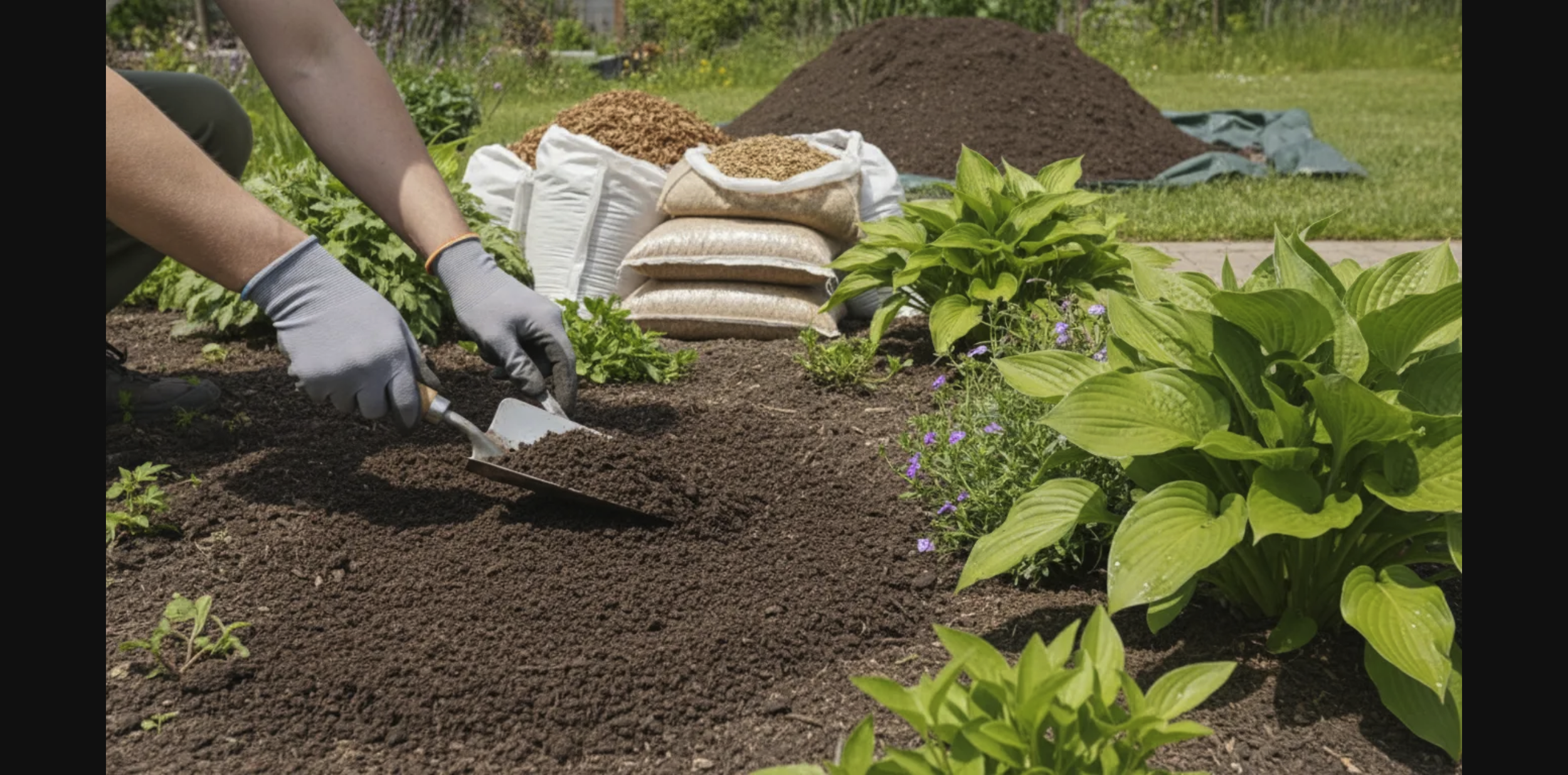
Compost Soil: Choosing the Right Blend for Your Project
Choosing a soil product starts with a simple question: are you adding an amendment to soil you already have, or bringing in a finished material for planting? The phrase compost soil is often used informally for either compost-containing soil or a planned blend of compost and other ingredients. Those options are related, but they are not interchangeable.
Compost is an organic soil amendment, while a finished compost-containing soil blend may also include mineral soil, sand, perlite, or other materials selected for a specific use. The right choice depends on your existing soil, the plants or surface involved, drainage needs, and the project specifications.
Understanding what the term means makes it easier to compare standalone compost with ready-to-use products and decide when a custom blend deserves closer planning.
Explore bulk soil and compost products for your project.
What Does Compost Soil Mean?
"Compost soil" is an informal phrase, not a single standardized product name. Depending on the project, someone may use it to mean finished compost added to existing soil. Or a ready-to-use blend that already combines compost with mineral soil and other ingredients. Those materials can serve different purposes, so the most useful question is not simply whether a product contains compost. It is whether the material's composition matches the planting, grading, lawn, or landscape application.
Compost as a soil amendment
Compost is produced by recycling organic materials into a soil amendment. The U.S. Environmental Protection Agency explains that compost can add organic matter to soil and support plant growth, water conservation and filtering, nutrient management, and erosion reduction. The EPA's compost guidance also describes applications across lawns, gardens, farms, parks, and other sites.
Used this way, compost is added to soil that is already present. Organic Recycling Inc. describes its Premium Compost as a stable, mature, screened product for landscaping and gardening applications. Its recommended use is to combine the compost with existing soil to increase natural soil nutrients. You can review the product details for this premium compost soil amendment.
Why pure compost is not structural soil
Finished compost can be valuable, but it is not automatically a replacement for mineral soil. Soil provides the physical framework that supports roots, grading, and the shape of a planting area. Compost contributes organic matter and biological activity, but using a material without considering texture, drainage, stability, and the needs of the site can create a poor match.
That distinction matters when a project needs material to establish grade, form a planting depth, or meet a drainage or engineered-soil specification. A compost amendment may be appropriate for improving existing soil, while a soil-and-compost blend may be more practical when the project needs a finished growing medium. The right choice depends on the site and the intended use, not on the word "compost" alone.
What a finished blend adds
A finished compost-and-soil blend combines compost with other materials selected for a defined use. For example, Organic Recycling Inc. describes its Premium Topsoil as natural mineral soil blended with screened yard-waste compost. A product such as this is different from buying compost separately and deciding later how to incorporate it. For gardens, planting beds, lawns, and larger landscape work, confirm the material's stated composition and recommended use before ordering.
For more specialized projects, soil testing and written specifications can help determine whether compost should be used as an amendment or as one component of a designed blend. This keeps the phrase compost soil from becoming a shortcut for materials that are not interchangeable.
Is Compost Soil the Same as Topsoil?
No. The phrase "compost soil" is often used informally for a soil product that contains compost, but compost and topsoil are not automatically interchangeable. Compost is an organic soil amendment. Topsoil is a mineral soil material used to establish or restore a planting medium. A finished blend may combine both, but its composition and intended use determine where it belongs in a landscape.
Compost is an amendment, not a complete substitute for soil
Finished compost adds organic matter to an existing soil and can support nutrient management, water handling, and plant establishment when used appropriately. Organic Recycling Inc. describes Premium Compost as a mature, screened amendment for landscaping and gardening applications. Its recommended use is to combine it with existing soil, rather than treating the compost alone as the base material for every planting or grading project.
That distinction matters because a project may need mineral structure, a particular texture, drainage characteristics, or a specified depth of soil. Pure compost does not automatically meet those requirements. Soil testing can also help inform amendment decisions, especially when the condition of the existing soil is unclear.
Topsoil may contain compost as part of a finished blend
Topsoil and compost can be combined to create a ready-to-use planting material. Organic Recycling Inc. Premium Topsoil combines natural mineral soil with screened yard-waste compost. The compost is matured before it is blended with the mineral soil, and the finished material is screened to 1/2 inch. It is described as a dark sandy loam.
In other words, this product is topsoil with compost incorporated into the blend, not simply a pile of compost labeled as soil. The mineral soil provides the base material, while the compost is one component of the finished product. You can learn more about topsoil blended with compost before deciding whether it fits your site.
Choose based on the work the material must do
A compost-containing topsoil blend can make sense for flower beds, shrubs, trees, lawn care, reseeding, and other seeded, sodded, or planting areas. Those uses call for a consistent soil material that can serve as the growing medium. A standalone compost amendment may be more appropriate when you already have suitable soil and want to incorporate organic matter into it.
For gardens or specialized projects, the right material may be a different finished blend or a soil made to project specifications. The key question is not whether a product uses the words compost or soil. It is whether its ingredients, screening, texture, and documented use match the planting, lawn, drainage, or construction requirement.
Material type.What it does.When to consider it.Finished compost.Adds mature organic matter to existing soil.Existing soil is suitable but needs an amendment.Compost-containing topsoil.Combines mineral soil with screened compost.Planting, lawn, reseeding, or broader soil placement.Garden soil blend.Combines loamy topsoil, compost, and perlite.Vegetable gardens, flower beds, or tilling.Custom or engineered soil.Is designed around written project requirements.Drainage, rooftop, rain-garden, or specification work.
When Does a Finished Compost-and-Soil Blend Make Sense?
A finished blend is useful when you want material designed for a particular planting or surface task rather than a separate amendment that must be mixed into another soil. The right choice depends on the composition and the job. A vegetable garden, a flower bed, a lawn repair project, and a top-dressing application do not necessarily need the same material.
Vegetable gardens and flower beds
For new vegetable gardens, flower beds, or areas being tilled into existing soil, ORI Garden Soil is formulated from loamy topsoil, mature compost, and perlite. That combination gives the material a soil base while incorporating compost and an aeration component. It is recommended for vegetable gardens, flower beds, and tilling into existing soil where the goal is to create a more suitable growing medium.
A ready-to-use blend can be a practical fit when the project needs more than compost alone. Standalone compost is an amendment for combining with existing soil. Garden Soil, by contrast, already includes loamy topsoil and perlite with the mature compost. Review the product composition and the condition of the existing site before deciding whether you need an amendment or a finished blend. You can explore ORI's compost-blended garden soil for its documented uses.
Planting areas, lawns, and reseeding
Some projects need a broader planting medium that can serve flower beds, shrubs, trees, or lawn work. ORI Premium Topsoil combines natural mineral soil with screened yard-waste compost. The finished product is screened to 1/2 inch and described as a dark sandy loam. ORI recommends it for seeded, sodded, and planting areas, including lawn care and reseeding.
This type of blend makes sense when the project calls for mineral soil along with compost, rather than a pure compost amendment. It can support the preparation of planting areas and lawn-related work without treating every landscape surface as if it has the same requirements. For the product details and stated applications, see topsoil blended with compost.
Top dressing and lawn repair
For lawn repair, newly seeded lawns, natural turf fields, or applications where fair drainage is desired, ORI Top Dressing uses a fine-screened sand-and-compost blend. ORI also lists planting, vegetable gardens, and tilling into existing soil with substantial clay or rock among its recommended uses. Its composition is therefore different from Garden Soil and Premium Topsoil, and the distinction matters when a project calls for a finer, sand-containing material at the surface.
Choose based on the surface, the existing soil, and the intended use, not simply on the word compost. Comparing the documented materials through ORI's compost and soil for topdressing page can help clarify which finished blend aligns with the work.
How Should You Plan a Compost Soil Project?
A little planning helps you choose between an amendment, a finished soil blend, or a custom material before ordering in bulk. Work through these steps so the product, quantity, and handling plan match the actual site.
Define the intended use. Start with what the material must support: a vegetable garden, planting bed, lawn repair, grading area, stormwater feature, or another application. Premium Compost is intended to be combined with existing soil as an amendment. While a finished product such as Garden Soil is formulated for uses including vegetable gardens and flower beds. For a lawn or planting project, a documented product use case is a better starting point than treating every compost-containing material as interchangeable.
Assess the existing soil and site conditions. Note whether the area is sandy, compacted, clay-heavy, rocky, poorly drained, or already productive. Record the planting area, slopes, low spots, access points, and any existing roots or utilities that could affect preparation. Existing conditions can determine whether you need an amendment, additional mineral soil, or a blend with different physical characteristics. Do not assume that adding more compost is always better. University of Minnesota Extension advises balancing compost additions with soil testing because excess nutrients can harm plants and pollute water: soil testing helps guide compost use.
Test the root zone. Oregon State University Extension says a soil test can help diagnose plant problems and inform fertilizer and soil-amendment choices. Collect the sample from the area where roots will grow, about 6 to 8 inches deep for most garden plants. A detailed laboratory analysis may include pH, calcium, phosphorus, potassium, and organic matter. If different beds or site areas have different conditions, test them separately rather than blending all samples into one result. This gives you a more useful basis for selecting a compost soil product and deciding whether project specifications need to be reviewed.
Measure dimensions and calculate volume. Record the length, width, and planned depth of each distinct area, then total the cubic volume. Keep planting beds, lawn sections, grading areas, and specialized features separate in your notes. Avoid guessing from the number of bags or from a truckload description. For a larger project, share the site measurements, drawings, estimated volume, and any required depth or tolerance with the supplier before material is prepared. This also supports a more accurate conversation about bulk ordering and staging.
Plan access and delivery. Identify where material can be unloaded, how far it must travel across the property, and whether the surface can support the equipment involved. Confirm delivery details, site restrictions, and the preferred placement before scheduling. A clear access plan reduces rehandling and helps distinguish a material-selection issue from a logistics issue.
Check whether the project requires custom soil. Residential planting work may fit a documented finished blend, but bioretention, rain-garden, lightweight rooftop, and other engineered applications can require specific physical and chemical properties. ORI provides custom soil blending for project specifications, including third-party testing, and reports custom projects ranging from 20 to 20,000 cubic yards. Bring the written specification to the supplier rather than inventing a recipe. For these applications, review the option for custom or engineered soil blends early in the planning process.
What Should You Check Before Ordering a Blend?
Before ordering a compost soil blend, confirm that the material matches the conditions and purpose of your project. A blend for a vegetable garden may not be the right choice for lawn repair, grading, drainage, or a specification-driven commercial installation. Ask for clear product information, then compare it with the requirements of the site.
Review maturity, screening, and ingredients
Ask whether the compost is mature and stable, how it is screened, and what materials make up the finished blend. Organic Recycling Inc. describes its Premium Compost as mature, screened compost made from natural vegetative feedstock. It is intended to be combined with existing soil as an amendment, rather than treated as a universal replacement for mineral soil. You can review the bulk soil and compost products to compare documented material descriptions and recommended uses.
For a finished garden blend, composition matters. ORI Garden Soil combines loamy topsoil, mature compost, and perlite. That is a different material from a standalone compost amendment. Ask whether the product is designed to be used as delivered or incorporated into soil already on the site. Do not assume that two products with similar names have the same texture, drainage, or intended application.
Match texture and drainage to the site
Consider the existing soil before choosing a blend. Clay, rock, compacted areas, sandy soil, and poorly draining ground can call for different material characteristics. ORI describes its Top Dressing as a fine-screened sand-and-compost blend for uses including lawn repair, planting, and projects where fair drainage is desired. That description may help frame your questions, but it does not replace an assessment of your specific site.
Confirm specifications, quantity, and delivery details
For a commercial, municipal, bioretention, rain-garden, rooftop, or other engineered project, provide the written specification before ordering. ORI offers custom soil blending, third-party testing, and specification-focused project support. Ask about the required ingredients, testing, acceptable particle size, drainage criteria, and documentation. Avoid selecting a recipe or ratio without those requirements.
Estimate the volume from the actual area and planned depth, and include allowances for access and placement planning without relying on a guessed delivery size. Confirm where the material can be unloaded, whether the truck can reach that location, and whether site conditions could restrict access. Finally, consider a soil test when existing conditions are uncertain. Testing can help inform amendment choices, including pH, nutrients, and organic matter, and can reduce the risk of adding material that the site does not need.
Can You Use Compost Soil for Every Landscape Project?
No. Compost soil can be a useful description for a soil product that contains compost. But it is not a universal substitute for mineral soil, screened fill, drainage media, or an engineered specification blend. The right choice depends on what the material must do after placement: support roots, establish turf, provide structure, level a site, manage water, or meet a design requirement.
Planting beds, gardens, and lawns
Compost-containing products are often appropriate for planting areas because they combine a mineral soil base with organic material. Organic Recycling Inc. Premium Topsoil combines natural mineral soil with screened yard-waste compost and is recommended for flower beds, shrubs, trees, lawn care, reseeding, and seeded or sodded areas. For vegetable gardens and flower beds, Garden Soil combines loamy topsoil, mature compost, and perlite. Those are finished products intended for specific planting uses, rather than pure compost being treated as a complete soil profile.
Standalone compost has a different role. ORI describes Premium Compost as a mature, screened amendment to combine with existing soil. That can make sense when the site already has a suitable mineral soil and needs an organic amendment. But it does not automatically solve problems involving grade, bearing, depth, or drainage. For lawn repair or freshly seeded areas, ORI Top Dressing is a fine-screened sand-and-compost blend intended for planting, lawn repairs, and situations where fair drainage is desired. Compost and soil for topdressing may be a better fit than a general compost product.
When another material is the better fit
Compost soil is not the same as grading or fill material. ORI Screened Fill is described as rock-free material for leveling, grading, or filling yards and lawns, not as a planting soil. Using a planting blend where a project needs stable fill can create a material mismatch. Likewise, a drainage-specific installation should not rely on a general compost blend simply because it contains organic matter. Drainage performance depends on the project design and specified material properties.
Rooftop gardens and other elevated structures have additional weight constraints. ORI identifies Lightweight Soil for those applications, while Bioretention Soil is intended for projects with drainage specifications. These are examples of situations where a named, engineered product is more appropriate than an informal compost soil label. ORI's custom soil team can help develop custom or engineered soil blends for documented specifications, including bioretention, rain-garden, and lightweight rooftop soil projects. Confirm the required composition, testing, and performance criteria before ordering.
Compare ORI soil and compost products before you order.
Frequently Asked Questions
What is compost soil?
Compost soil is an informal term for soil that contains finished compost, or for a planned blend of soil and compost selected for a specific use. Compost is an organic soil amendment, while a finished product may also include mineral soil, sand, perlite, or other components. The right choice depends on whether you are improving existing soil, filling a planting area, repairing a lawn, or meeting a project specification. Compost can add organic matter and support plant growth and water management.
Is compost soil the same as topsoil?
No. Topsoil is primarily mineral soil, although some topsoil products include compost. For example, ORI Premium Topsoil combines natural mineral soil with screened yard-waste compost and is intended for lawns, planting areas, flower beds, shrubs, and trees. Pure compost is better understood as an amendment to incorporate into suitable existing soil, not an automatic replacement for every soil product.
Is compost better than potting soil?
Neither is universally better because they serve different purposes. Compost is generally used outdoors as an amendment or as an ingredient in a soil blend. Potting soil is formulated for containers, where drainage, aeration, moisture retention, and container performance must be balanced. For an in-ground bed, lawn repair, or landscape planting area, choose a product matched to that setting rather than substituting one material based only on its organic content.
How do I make compost soil?
Start by identifying the project and evaluating the existing soil. A soil test can help guide amendment choices by measuring factors such as pH, nutrients, and organic matter. Then select a mature, screened compost or a finished blend designed for the application. Avoid guessing at a ratio for a large or specialized project. Excessive compost additions can create nutrient problems, so follow test results and project specifications when determining what to use.
Ready to Choose the Right Soil or Compost Product?
The right material depends on your planting goals, existing soil, drainage needs, and project scale. Reviewing the available products before ordering can help you compare standalone compost, finished blends, and topsoil options with a clearer plan. To explore Organic Recycling Inc.'s bulk soil and compost products or discuss project-specific material guidance, contact the team through the soil and compost product page.