
How to Landscape with Rocks and Stones: NJ & NY Ideas
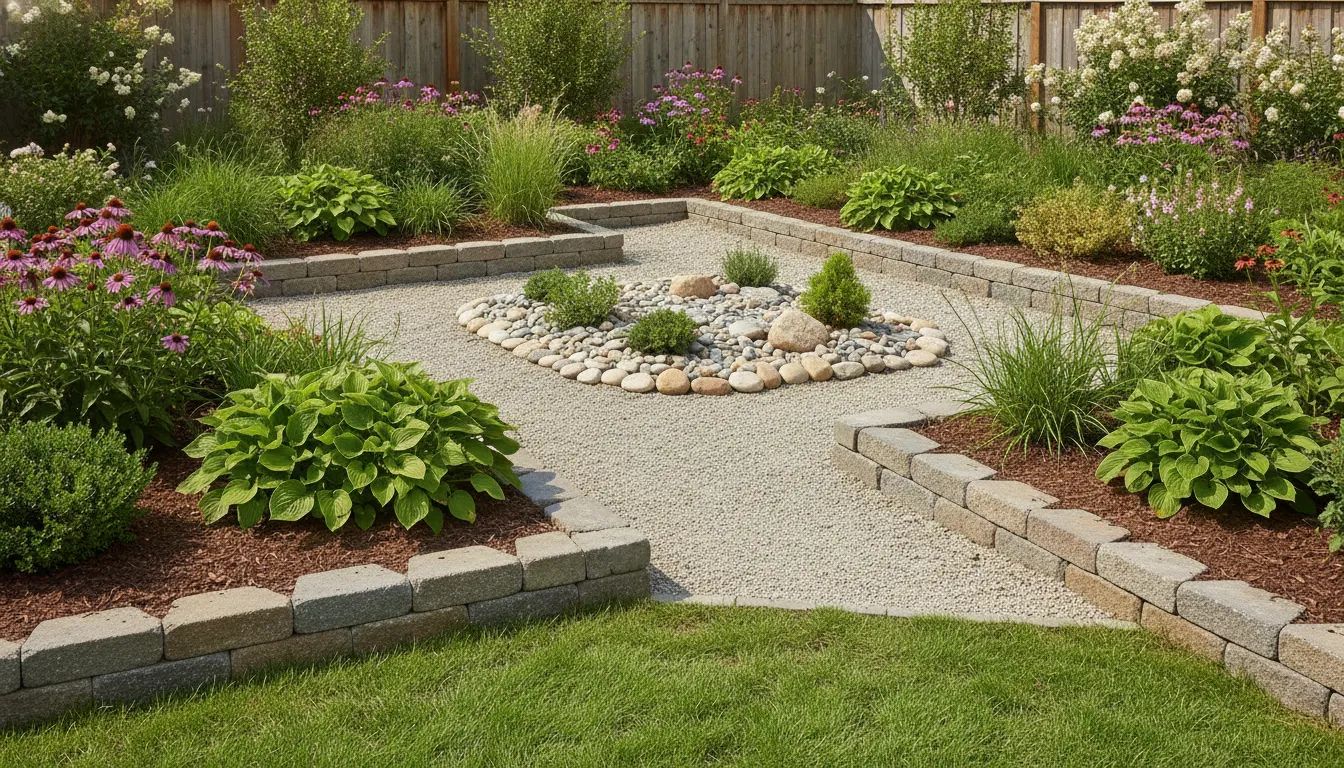
Rocks and stones can do more than add contrast to a planting bed. Used thoughtfully, they define edges, create durable ground cover, highlight individual plants, support paths, and help direct water where it needs to go. The best results come from matching the material, size, and base preparation to the job rather than spreading the same stone across the entire yard.
The practical answer to how to landscape with rocks and stones is to start with the project purpose: use edging to contain beds, decorative stone to reduce maintenance and retain moisture. Larger rock for garden accents, and properly prepared gravel or crushed stone for paths and drainage areas.
Stone-focused landscaping can support a low-maintenance design while adding useful visual texture. Drainage features such as dry streambeds and rain gardens can also help manage runoff and encourage infiltration when they are planned for the site. Before choosing a material, map the area, establish clean boundaries, and prepare a stable foundation so the finished work looks intentional and performs as expected.
Browse the stone and gravel catalog to find materials for edging, beds, and drainage.
A Simple Plan for How to Landscape with Rocks and Stones
A successful stone landscape starts with a practical layout, not a truckload of material. Begin with one manageable area, such as a narrow garden bed, walkway border, or drainage spot near a downspout. Working in a small section makes it easier to test the appearance, adjust the grade, and learn how the material behaves after rain.
Sketch the layout before moving material
Use graph paper or a quick drawing to mark the house, planting areas, paths, trees, steps, and any places where water collects. Note the length and width of each proposed rock bed, then decide where the stone will transition to lawn, mulch, pavement, or soil. A simple sketch helps you avoid awkward curves, blocked access, and unnecessary material changes.
Rock and stone can add visual texture while supporting a low-maintenance design. In the right location, a stone bed can also help manage drainage by giving water room to move and infiltrate rather than concentrating runoff in one spot. The EPA's landscaping guidance identifies rain gardens, vegetated swales, and dry streambeds as approaches that can reduce erosion and promote infiltration.
Define edges and prepare the base
Clear boundaries are important for both appearance and maintenance. Mark the outline with a hose or stakes, cut a clean edge, and remove grass, weeds, and loose roots from the area. If the bed meets a walkway or driveway, keep the finished stone level with the surrounding surface where appropriate so it does not spill into the travel path.
Prepare a reasonably firm, even base before adding stone. The appropriate underlayment can help separate the material from the soil and limit weed growth, while the right stone size should match the use. Decorative stone may suit a visible garden bed, while a more angular crushed material may provide better stability beneath a path. These preparation choices are central to building a bed that stays defined instead of spreading into nearby areas.
Measure the area and order the right quantity
Measure each section in feet and calculate its surface area. For an irregular bed, divide the shape into smaller rectangles or triangles and add the results. Then estimate the volume using the intended depth. Keep the calculation consistent with the supplier's measurement method. And allow for the depth needed for your selected material rather than guessing from the number of bags used on a previous project.
Use Organic Recycling Inc.'s volume calculator to estimate your material needs, and review the delivery options before scheduling a bulk order. Confirm that the planned drop-off location is accessible and that the delivery area will not interfere with vehicles, gates, or pedestrians.
Once the outline, base, depth, and quantity are settled, choose the stone that fits the function and the surrounding landscape. A clear plan reduces waste and gives you a finished edge that looks intentional from the first season onward.
Which Rocks and Stones Are Best for Your Yard?
The best landscape stone depends on how the area will function, how much foot traffic it will receive, and the visual effect you want. A small, angular aggregate can create a stable walking surface, while rounded stone works better as a soft-looking accent around plants. Before ordering, measure the area and decide whether the material will serve as a path, bed covering, border, or decorative focal point.
Common residential options include:
- Pea gravel: Small, rounded stones that create a comfortable, informal surface for garden paths, seating areas, and other lightly trafficked spaces. Its loose shape gives it a relaxed appearance, but it may shift more easily than angular crushed stone.
- River stone: Naturally rounded rock with a smooth, water-worn appearance. Larger river stone works well around downspouts, dry creek beds, water features, and planted areas where you want visual texture without sharp edges.
- Crushed stone: Angular pieces that interlock more readily than rounded gravel. This makes crushed stone a practical choice for paths, walkways, utility areas, and base layers that need a more stable surface.
- Decorative stones: A broad category of screened or visually distinctive stone selected primarily for color, texture, and finish. Use it around shrubs, trees, entryways, and garden beds when appearance is the main priority.
Size matters as much as material type. Smaller stone is easier to rake into a smooth surface and can work well in narrow paths or between planting areas. Medium and larger stone is less likely to disappear into soil and provides stronger visual definition for borders, accents, and drainage features. Avoid choosing a material solely by color. Consider whether it will migrate onto a walkway, become difficult to move, or interfere with mowing and planting.
Stone and rock mulch can also support a lower-maintenance landscape. Used as a ground cover, decorative stone can help suppress weeds, retain moisture, and reduce the need for frequent bed upkeep. The University of Minnesota Extension notes that selecting suitable landscape materials can reduce water use and maintenance requirements while improving the appearance of garden spaces. For drainage-focused designs, gravel and stone can be incorporated into features such as dry streambeds or rain gardens. But the underlying grading and soil conditions still determine how well water moves.
Organic Recycling Inc. carries multiple landscape stone options, including Pea Gravel #200, River Stone #1, and Crushed Stone #21. Review the catalog of decorative stones, gravel, and crushed stone to compare available materials and select a product suited to your layout. If your project also needs mulch, masonry materials, or other bulk products, browse the broader landscape supplies catalog. Choose the material that fits the job first, then coordinate color and texture across the rest of the yard.
Use Rocks and Stones for Edging and Garden Beds
Rocks can serve two different purposes in a landscape: defining the boundary of a bed or path, and covering the soil inside that boundary. Choosing the right role first makes the installation easier and keeps the finished design from looking crowded.
Stone edging creates a clear visual line between lawn, planting areas, walkways, and other surfaces. A continuous row of appropriately sized stones can help a curved bed hold its shape and give mowing or trimming a more predictable boundary. It also adds texture without requiring a large quantity of material. Set the edge after marking the bed outline, then prepare a firm base so the stones do not shift as the ground settles.
Stone ground cover works differently. Instead of forming a border, it fills the open space around plants and shrubs. Decorative stones can suppress weeds and help retain soil moisture, reducing the amount of routine maintenance needed in the bed. They can also provide a clean, finished appearance when the color and size complement the plants, siding, pavement, or other nearby materials. Review the catalog of decorative stones to compare options for this type of application.
| Consideration. | Stone edging. | Stone ground cover / rock bed. |
|---|---|---|
| Cleanup | Use a defined border to keep soil, mulch, and lawn growth separated and make trimming around the bed more orderly. | Keep the bed surface free of leaves and plant debris so the decorative stone continues to look neat. |
| Weed control | Limits the boundary but does not replace weed prevention inside the planting area. | Provides ground cover that suppresses weeds when the bed is properly prepared. |
| Depth | Usually uses a narrow, continuous row set securely along the edge. | Requires an even layer across the bed, with the amount determined by the material and site conditions. |
| Best use | Shaping garden borders, separating paths, and creating a crisp transition between landscape surfaces. | Covering open soil around established plants, highlighting specimen areas, and creating a lower-maintenance bed. |
For many projects, the strongest design uses both approaches. A stone border can define the footprint, while decorative rock inside the bed creates a consistent surface around selected plants. Before ordering, measure the area and account for curves, planting gaps, and transitions to paths. This prevents a narrow edging project from being overbuilt or a broad rock bed from receiving too little material to provide consistent coverage.
Build a Rock Garden or Rock Bed
A rock garden or stone bed can give a yard structure, texture, and a practical low-maintenance ground cover. The most successful installations begin with preparation rather than with the stone itself. Plan the shape, control weeds at the foundation, and select material that fits the scale and purpose of the space.
Choose the location and plan the layout
Start by deciding what the bed needs to accomplish. A planting-focused rock garden may sit near a patio, walkway, or foundation, while a simple decorative bed can define a lawn or frame a driveway. Observe how the area handles rain and whether water naturally collects there. Sketch the outline before digging, and keep the shape broad enough to look intentional from the main viewing angle. Include room for plants, accent boulders, and access for future maintenance.
Clear the area and establish firm edges
Remove grass, weeds, roots, and loose debris from the entire footprint. Dig down enough to create a stable base and to keep the finished stone surface from sitting noticeably higher than nearby paths or lawn. Then set clear boundaries using edging, a shallow trench, or another durable border. Defined edges keep stone from migrating into the grass and make trimming and replenishment easier. Proper bed preparation includes clear boundaries, appropriate underlayment, and stone sized for the intended use, as outlined in this guide to landscape stone types.
Install underlayment for weed control
Lay a suitable landscape underlayment across the prepared soil, overlapping seams and securing the material so it does not shift during installation. This layer helps limit weed growth from below, although it will not prevent seeds from settling on top of the finished bed. Avoid leaving exposed gaps around the edges. If you are planting, cut neat openings only where needed, rather than removing large sections of the underlayment.
Spread and level the base stone
Add a compatible base material where the bed needs additional support or drainage, then rake it into an even layer. The correct stone size depends on the application, the slope, and the look you want. Smaller aggregate can create a more uniform surface, while larger pieces provide stronger visual definition. Order carefully by using the volume calculator to estimate material needs from the bed's length, width, and planned depth.
Add accent boulders and plants
Place the largest boulders first, partially setting them into the ground so they appear anchored rather than scattered on top. Group accents in uneven numbers and vary their orientation for a natural composition. Add plants after the major stones are positioned, leaving enough space for mature growth and maintenance. Finish with the selected decorative stone, spreading it evenly around the boulders and plants. Decorative stone can suppress weeds and help retain moisture, making it useful as ground cover when installed over a properly prepared surface. Review ORI's catalog of decorative stones to compare materials for the bed's color, texture, and scale.
After installation, inspect the edges after heavy rain and rake displaced stone back into place. Occasional hand-weeding and topping up low spots will keep the bed neat without turning it into a high-maintenance feature.
Design Stone Paths, Walkways, and Drainage
Stone can make a landscape easier to navigate while helping direct water where it needs to go. For a garden path or walkway, crushed stone creates a durable, stable surface that can handle regular foot traffic when it is properly laid. Its compact texture also provides a more natural transition between planting beds, lawns, patios, and other hardscape features than a solid paved surface.
Start by marking the route and clearing away vegetation, loose soil, and roots. Give the path a defined edge so the stone stays in place and does not gradually spread into adjacent beds. Foundation preparation matters as well. A firm, well-prepared base improves stability and helps limit ruts, shifting, and low spots after rain. Choose a material and particle size that suit the intended use, then plan the quantity with the project's dimensions in mind.
Review the crushed stone catalog to compare available options for paths and other landscape applications. If you are ordering for a larger property or need material delivered to the project site, the delivery service can help you plan the logistics.
Use stone to slow and redirect stormwater
Stone beds, gravel zones, and dry streambeds can also become practical parts of a drainage plan. Rather than allowing rainwater to run quickly across a compacted or impervious surface. A properly designed stone area can slow the flow, reduce erosion, and give water more opportunity to infiltrate the soil. The EPA's municipal landscaping guidance identifies rain gardens, vegetated swales, and dry streambeds as approaches that can manage runoff and promote infiltration.
Use the existing grade to determine where water naturally collects, then design the stone feature to support that flow without directing water toward foundations, walkways, or neighboring properties. A shallow gravel channel can define a route for runoff, while a broader stone bed can protect a low area from repeated soil disturbance. Keep the feature integrated with the surrounding landscape by pairing stone with suitable plants, mulch, or planted edges where appropriate.
Consider permeable and rain-garden applications
For patios, paths, and transition areas, permeable aggregate systems can reduce the runoff associated with continuous impervious surfaces. Penn State Extension notes that permeable pavers and aggregates can help reduce runoff, improve water quality, and manage stormwater on site. In a rain garden, stone and gravel work with the soil and plants to support infiltration and localized drainage management. Penn State's rain garden guidance emphasizes appropriate soil and gravel conditions for infiltration and plant health.
Whether you are building a walkway or addressing a wet area, treat drainage as a design requirement rather than an afterthought. Select the right stone for the application, prepare the base carefully, and confirm the material quantity before delivery.
How Do You Keep Weeds Out of Rock Landscaping?
Rock landscaping can reduce routine weeding, but the result depends on preparation as much as the stone itself. A well-laid rock bed blocks light, limits exposed soil, and creates a stable ground cover that makes it harder for many weeds to establish. Decorative stones can also help retain moisture in the soil, which supports nearby plants while reducing the need for constant bed maintenance.
Start with a clean, well-defined bed
Before spreading stone, remove existing weeds, roots, and loose organic debris from the entire area. Pulling visible growth without removing the roots can leave the bed vulnerable to quick regrowth. Shape the boundary with a clear edge, such as a shallow trench or suitable edging material. Defined edges keep lawn runners and garden soil from creeping into the rock, where new weeds can take hold.
Use the right underlayment
Landscape fabric or another appropriate underlayment can provide an additional barrier between the soil and the rock. Lay it over the prepared ground, overlap seams, and secure it so it does not shift while stone is being installed. The underlayment should allow water to move through while reducing weed growth from below. It is not a substitute for removing established weeds, and it will not stop seeds that arrive later on the surface.
For beds next to trees or established shrubs, leave enough room around trunks and stems for healthy growth. Avoid trapping moisture directly against plant bases, and follow the product instructions for any underlayment you use. Good preparation protects the appearance of the bed without creating unnecessary problems for existing plants.
Choose an appropriate stone depth and size
A thin, scattered layer can expose soil and fabric, allowing sunlight and windblown seeds to reach favorable conditions. Install enough material to create an even, continuous cover, using a depth suited to the stone size and the intended application. Larger stones may leave wider gaps, while very small material can compact or migrate more easily. Selecting the correct stone size is part of proper bed preparation, not simply a visual decision.
- Remove weeds and roots before installing the underlayment.
- Keep the fabric flat, overlapped, and secured at the edges.
- Spread stone evenly so there are no exposed patches of soil.
- Match the material size to the bed, path, or accent area.
Maintain the edges and surface
Even a properly installed bed needs occasional attention. Sweep or rake displaced stone back into thin spots, remove seedlings before they mature. And clear leaves or other organic debris that can form a growing medium on top of the rock. Check the edges after heavy rain and seasonal mowing, especially where grass meets the bed. For material and project options, review Organic Recycling Inc.'s landscape supplies catalog. With clean boundaries, suitable underlayment, consistent coverage, and simple seasonal maintenance, rock landscaping can remain an attractive, low-maintenance ground cover.
Do You Need Landscape Fabric Under Rocks and Stones?
Landscape fabric can be useful beneath rocks and stones, but it is not required for every project. The right choice depends on the purpose of the area, the soil conditions, and how easily you need water to move through the ground. In a decorative bed, a properly installed underlayment can create a separation layer between soil and stone, helping limit weed growth and making future maintenance easier.
Fabric works best where the primary goal is to cover an established planting bed, define a low-maintenance border, or support decorative stone around shrubs and other landscape features. Decorative stones already provide ground cover that suppresses weeds and helps retain soil moisture, and an underlayment can reinforce that effect when the bed is prepared correctly. It will not eliminate every weed, however. Seeds can still settle on top of the stone and germinate in accumulated soil or organic debris.
When landscape fabric helps
Use an appropriate landscape underlayment when you are creating a relatively stable rock bed and want to reduce weed pressure between the soil and the stone. Start by removing existing weeds and roots, leveling the area, and defining the edges. Lay the fabric smoothly with overlapping seams, secure it as recommended for the product, and cover it fully with stone. Leaving fabric exposed can make the installation look unfinished and may allow it to break down more quickly.
Material selection matters as much as the fabric itself. Choose stone sized for the application, whether that means decorative rock for a garden bed or a different aggregate for a functional surface. Organic Recycling Inc.'s landscape supplies catalog can help you review available bulk materials before finalizing the design. Estimate the area and depth carefully so the underlayment is covered evenly rather than leaving thin spots where weeds can emerge.
When fabric can cause problems
Landscape fabric is not always the best layer under stone in wet areas, drainage zones, or locations where the soil needs to exchange water freely. If the material is poorly selected, installed over compacted soil, or allowed to clog with fine particles, it can interfere with drainage instead of solving the problem. In a rain garden, dry creek bed, or other stormwater feature, the grading and underlying soil or aggregate system should be designed to support infiltration. The U.S. Environmental Protection Agency identifies rain gardens and dry streambeds as landscape approaches that can manage runoff, reduce erosion, and promote infiltration: EPA landscaping guidance.
For a simple decorative bed, fabric is often a practical weed-management layer. For a drainage-focused installation, prioritize the water movement requirements first and use an underlayment only when it fits the system. Clear preparation, defined edges, suitable stone size, and full coverage are the foundation of a durable result.
Explore decorative stones and gravel for a low-maintenance rock landscape.
Frequently Asked Questions
Can you put rocks directly on soil?
It is better to prepare the soil first. Remove weeds, roots, and loose debris, then establish clean edges and add an appropriate underlayment before placing the stone. This helps limit weed growth and keeps the material from sinking into soft or muddy soil. The right preparation also makes future maintenance easier.
How deep should landscape rock beds be?
Plan for enough material to cover the soil consistently without creating unnecessary weight or making the bed difficult to maintain. A common residential starting point is 2 to 3 inches, but the final depth depends on the stone size. Site conditions, and whether the bed is decorative or intended to support drainage. Use the project dimensions to estimate the quantity before ordering.
What do you put down before rocks for landscaping?
Start with a cleared, graded soil surface and use landscape fabric or another suitable underlayment where weed control is a priority. Fabric should not replace proper weed removal or drainage planning. For paths and drainage areas, the base must also be appropriate for the intended load and water flow. Proper boundaries, underlayment, and stone selection are key parts of preparing a rock bed.
What are the best types of stones for landscaping?
The best material depends on the job. Pea gravel and river stone can provide different decorative textures, while crushed stone is often a practical choice for paths. Walkways, and drainage applications because it forms a stable surface when properly installed. Consider color, size, movement underfoot, drainage needs, and how the stone will relate to nearby plants and hardscape before choosing.
Ready to Start Landscaping with Rocks and Stones?
Whether you are outlining a garden bed, building a stone path, or adding decorative rock accents. The right materials make the difference between a project that lasts and one that needs redoing. Organic Recycling Inc. supplies premium pea gravel, river stone, crushed stone, and decorative landscape rock in bulk. Delivered quickly across Northern New Jersey, Southern New York, Western Connecticut, and parts of Pennsylvania.
Browse the stone and gravel catalog to pick the right material for your yard.
Use the online volume calculator to measure how much stone you need, then get a delivery quote for your project. Our team is ready to help you choose the right size and type for edging, beds, and drainage.