
Fill Dirt Near Me: Choose the Right Material
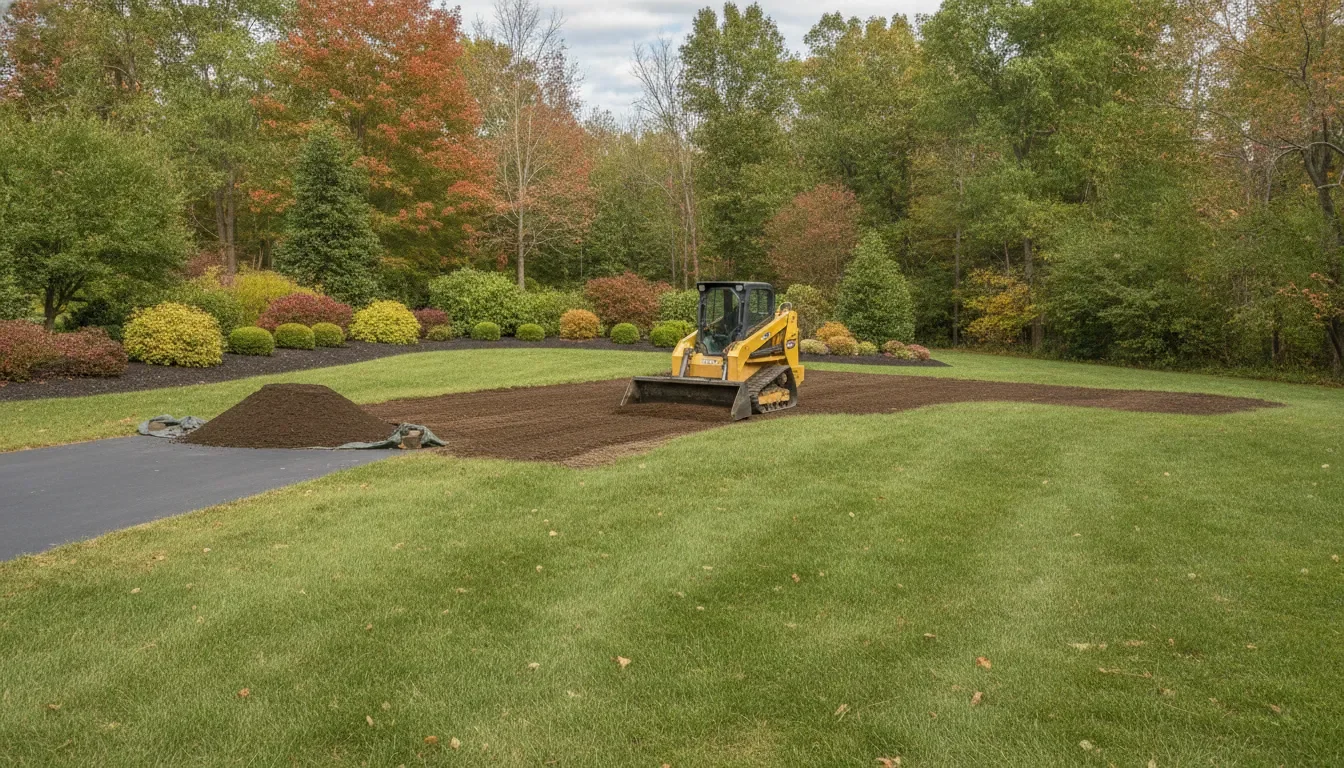
A level yard starts with the right material beneath the finished surface. If you are filling a depression, correcting an uneven grade, or preparing a construction area. The goal is a stable base that supports drainage and a smooth final profile. The material used for that work is not necessarily the same soil you would spread around plants.
When people search for fill dirt near me, they are usually looking for a bulk material for structural filling, grading, or leveling. Screened fill can help address holes and low areas, while planting topsoil belongs at the surface because it contains the organic matter and nutrients plants need.
Choosing well means considering the depth of the fill, the existing soil, the drainage pattern, and what the finished area will be used for. Organic Recycling Inc. supplies bulk landscape materials across Northern New Jersey, Southern New York. Western Connecticut, and select parts of Pennsylvania, with delivery options for residential, commercial, and municipal projects. Start by identifying the practical jobs fill material performs before deciding what belongs in the planting layer.
Explore bulk landscape supplies for your project
What Is Fill Dirt Used For?
Fill dirt is primarily a structural material. It is used to raise low areas, fill holes and depressions, and create a more consistent base before a project receives its finished surface. Homeowners may need it when part of a yard sits lower than the surrounding grade. Contractors may use it while preparing a building area, driveway approach, lawn, or other space that needs a stable, workable profile. For a project involving substantial grading, screened fill may be a practical material to discuss with a bulk supplier.
Correcting low spots and uneven ground
One of the most common uses is correcting surface irregularities. Regrading can remove or reduce mounds, depressions, old terraces, ruts, and other uneven areas that interfere with drainage or the way a site is used. A smoother grade can also create a better starting point for lawn installation, landscaping, access routes, or future construction. The fill is placed where additional elevation is needed, then distributed and shaped to match the planned grade.
Leveling is not simply a matter of making every part of a property perfectly flat. The finished surface should support the intended use while allowing water to move appropriately. If a low spot collects water, adding fill may help correct the grade, but the solution depends on the surrounding slopes and existing drainage pattern. Regrading is intended to improve surface drainage and can reduce conditions that contribute to erosion. The USDA Natural Resources Conservation Service identifies these goals as part of precision land forming guidance: removing surface irregularities can improve drainage. Reduce erosion, and support more efficient site use. Review the NRCS guidance for additional planning considerations.
Preparing a site before the finish layer
Fill material can establish the rough shape of a yard or work area before a suitable surface layer is added. It is not automatically the right material for planting. Fill dirt is used for structural filling, while topsoil is the upper growing layer and contains the organic matter and nutrients plants need. Using the materials for their intended roles helps prevent a grading material from being treated as a complete planting medium.
Before ordering or spreading fill, assess the site rather than relying only on its appearance. Existing soil conditions, current drainage, and the property's historical use can affect how the area should be graded or reconditioned. A field assessment can help identify unsuitable areas and possible strategies for improving them. This matters particularly on sites that have been disturbed by prior construction, storage, traffic, or other uses. The U.S. Environmental Protection Agency's site-suitability guidance emphasizes characterizing the site and soils, including historical uses, before soil work begins. See the EPA reference for that broader assessment framework.
Check utilities before grading begins
Any excavation, reshaping, or significant placement of material should include a utility check before work starts. Buried utilities may include drain tile and other subsurface structures that are not visible from the surface. Landowners and contractors are responsible for locating buried utilities in the project area before excavation or grading. Confirming their locations helps protect the work crew, the property, and the infrastructure while allowing the grade to be planned around known site constraints.
With the site assessed and utilities identified, the next decision is how much structural fill the project needs and what material should form the finished surface. That distinction keeps grading work focused on stability and drainage, while reserving planting soil for the layer where grass, flowers, shrubs, or other vegetation will grow.
How Does Screened Fill Compare With Planting Topsoil?
Screened fill and planting topsoil can both change the grade of a property, but they serve different purposes. Screened fill is the practical choice when the project calls for structural volume, such as filling a depression, raising a low area, or creating a more even base. Planting topsoil belongs closer to the finished surface, where roots, seeds, and turf need organic matter and nutrients.
That distinction matters when you are searching for fill dirt near me. A material that works well for leveling may not provide the soil environment that plants need. Likewise, using nutrient-rich topsoil deep inside a large fill area may not be the most appropriate way to build the grade. The right approach often uses each material in the layer where it performs best.
Material: Best use | Primary value | Typical placement
Screened fill: Grading, leveling, and filling holes or depressions | Structural volume and a more consistent base | Below the planting or finish layer
Planting topsoil: Lawns, gardens, beds, and other planted areas | Organic matter, nutrients, and a root-supporting surface | At or near the finished planting surface
Screened fill: use below the finish layer for grading, leveling, and structural volume.
Planting topsoil: use at the surface for lawns, gardens, beds, and root growth.
Screened fill helps establish a consistent base for grading and leveling.
Why screened fill fits grading and leveling
Fill dirt is intended for structural work rather than plant nutrition. It can provide the volume needed to address holes or depressions and help create a smoother grade before the final surface is installed. Regrading can remove surface irregularities, improve surface drainage, and reduce erosion when the finished contours are planned correctly. The Natural Resources Conservation Service identifies those outcomes as goals of precision land forming. Review the NRCS grading guidance for additional planning context.
For a product intended for this role, see Organic Recycling Inc.'s screened fill. Before ordering, consider the depth of the low area, the desired finished grade, access for placement, and existing drainage conditions. A site assessment is especially important where previous construction or other land use may affect soil suitability.
Why planting topsoil belongs at the surface
Planting topsoil provides the surface environment that roots and seeds require.
Topsoil is the upper soil layer and is richer in organic matter and nutrients than structural fill. Stable organic matter supports soil structure, water infiltration, and aeration, while also helping soil hold nutrients for later plant uptake. Cornell Cooperative Extension explains that organic matter improves the soil's ability to retain and supply nutrients such as calcium, magnesium, and potassium. Those properties support lawns, planting beds, gardens, and other areas where living plants are the end use.
In practice, a project may use screened fill to establish the broad grade, then place an appropriate planting layer over it. The exact depth and material selection depend on the site, intended use, and existing soil. If construction has left the area compacted or low in organic matter, the surface may need reconditioning rather than simply more fill. Choosing the material by function helps prevent a common mistake: treating all bulk soil as interchangeable.
How Do You Choose the Right Fill Material for Your Project?
The best fill material depends on what the site needs to do after the work is complete. A low area beneath a patio, a broad lawn that needs leveling, and a future planting bed may require different layers or soil properties. Use this sequence to evaluate the project before ordering bulk material.
Assess the area, depth, and intended finish
Walk the entire area and note depressions, slopes, standing water, exposed roots, soft spots, and any existing material that may need to be removed. Measure the approximate length, width, and depth of the low areas instead of judging the volume by eye. Also identify the intended finish: a stable base for construction, a leveled lawn, a driveway approach, or a planting surface. A proper field assessment considers current soil suitability, site conditions, and historical land use before grading or reconditioning begins. See the EPA's site suitability guidance for why those conditions matter.
Identify drainage and compaction needs
Do not choose fill solely because it is available nearby. First determine where water should go and whether the existing grade encourages pooling or concentrated runoff. Regrading is intended to remove surface irregularities, improve drainage, and reduce erosion. But adding material without a drainage plan can move the problem toward a foundation, walkway, or neighboring property. The NRCS describes the importance of correcting mounds and depressions that interfere with surface drainage and erosion control in its precision land forming guidance.
Consider how much the fill must support and how it will be placed and compacted. A structural fill application calls for a different evaluation than a shallow lawn correction. If the soil has been disturbed by construction or has a history of heavy use, identify whether it needs reconditioning rather than simply more fill. Before excavation or grading, arrange for all buried utilities, drain tile, and other underground features to be located.
Choose the surface layer separately
Fill material can establish grade and replace volume, but the top layer should match the final use. A lawn, garden, or planted landscape generally needs a planting soil with suitable organic matter and nutrient-holding capacity. A construction or hardscape area may need a firm, appropriately prepared base instead. Match the soil type and properties to the intended use, particularly when landscaping or gardening will follow. This layered approach prevents using planting soil deep in a depression where structural fill is more appropriate or leaving a planting area with material that does not support healthy establishment.
Estimate quantity and plan truck access
Calculate each area separately, then account for the depth of fill and the surface layer rather than combining them into one rough guess. The volume calculator can help estimate the material required from your project dimensions. Keep the estimate organized by material so the delivery matches the installation plan.
Finally, inspect the delivery route. Note driveway width, overhead branches or wires, gates, turning space, soft ground, and the exact place where material can be unloaded without blocking access or damaging finished surfaces. Share these details when discussing the project. A clear site plan helps match the material and delivery approach to the work, whether the project is a small residential yard or a larger landscape installation.
Where Can You Find Fill Dirt Near Me in the Tri-State Area?
A search for "fill dirt near me" is really a search for material that fits the project and can reach the site safely. A nearby supplier may not offer the right fill for your grading plan. And the closest yard is not always the most practical option when the order requires bulk delivery. Start by defining the work: filling a depression, raising a low area, preparing a building or driveway base. Improving the shape of a yard, or creating a stable grade before adding a finish layer.
Material fit matters because fill dirt and topsoil serve different purposes. Fill material is generally selected for structural filling, grading, or leveling. Topsoil belongs at the planting surface when a lawn, garden, or landscape bed will follow. A supplier should be able to discuss the intended use, existing site conditions, access, and the amount of material required instead of treating every soil order as interchangeable.
Which local delivery area does Organic Recycling Inc. serve?
Organic Recycling Inc. provides bulk landscape material delivery throughout a defined Tri-State service territory. This includes Northern New Jersey; Southern New York, including Rockland, Orange. And Westchester Counties and all five boroughs of New York City; Western Connecticut; and select parts of Pennsylvania. Coverage can depend on the specific project and material, so confirm the details for your address before planning the work around a delivery.
Westchester County has an important logistics distinction. Organic Recycling Inc. serves Westchester through delivery from its Orange County locations. It is not a Westchester pickup yard. That means customers searching locally should plan for delivery rather than assuming they can collect fill material at a nearby Westchester facility. Reviewing the bulk delivery information can help you understand the available logistics and prepare the site for receiving a large load.
How does delivery support different project sizes?
Organic Recycling Inc. uses an owned fleet to support reliable delivery of bulk materials. The fleet model can be useful when a residential property needs material for a yard correction. When a landscaper is preparing a larger installation, or when a commercial or municipal project requires coordinated soil and landscape-supply deliveries. The appropriate delivery arrangement still depends on the address, site access, material selection, order details, and current scheduling. Do not assume that a particular product, load size, or delivery date is available until the project has been reviewed.
Before ordering, identify where the truck can access the property and where the material should be placed. Consider narrow streets, low branches, overhead wires, soft ground, steep drives, retaining walls, and any limits on vehicle movement. A clear drop area helps reduce surprises and makes it easier to use the material efficiently after it arrives. For grading work, assess existing drainage and the current soil conditions first. Regrading can remove mounds and depressions, improve surface drainage, and reduce erosion, but the right approach depends on the site rather than distance from the supplier.
For specialized residential, commercial, and municipal needs, Organic Recycling Inc. can also provide custom or engineered soil options. If the project needs more than basic structural fill, describe the finished use and site conditions when requesting guidance. That information helps separate a simple grading load from a project that needs a defined soil blend or a planting layer.
Review delivery options for your project
When Should You Use Topsoil or an Engineered Soil Blend?
Once structural fill has brought a low area to the right elevation, the material at the surface needs to support the finished use of the space. Planting topsoil is usually the practical choice for lawns, vegetable gardens, ornamental beds, and other areas where seed, sod, or roots will need a suitable growing medium. It is different from fill dirt because it contains more organic matter and nutrients, which are important at the planting surface. Using fill as the final layer can leave plants with a poor environment even when the grading itself is sound.
For a lawn, topsoil can provide the finish layer needed for seedbed preparation and establishment after grading. Before spreading it, confirm that the underlying fill is stable and that the surface drains as intended. In a garden or planting bed, the same distinction matters, but the soil may also need to support deeper root development and consistent moisture. Soil organic matter helps improve structure, water infiltration, and aeration, while also helping the soil hold nutrients for later plant uptake. Cornell Cooperative Extension explains how soil organic matter supports these functions.
When is an engineered soil blend the better fit?
A standard topsoil may be appropriate for a straightforward residential planting project. An engineered blend is worth considering when the soil must meet a defined performance goal or project specification. This can include a commercial landscape installation, a municipal planting project, a green-infrastructure area, a restoration job, or a site with unusual existing soil conditions. The right blend depends on the intended plants, drainage needs, depth, site conditions, and other requirements established by the project team. It should not be selected simply because it sounds more specialized.
Compacted urban soil is one example where reconditioning may be necessary. Construction activity or historical land use can leave soil dense and low in organic matter. A site assessment should identify the current soil condition and determine whether compost amendment or another reconditioning strategy is appropriate. Compost can address low organic matter and improve the soil environment, but it should be incorporated as part of a deliberate soil plan rather than spread indiscriminately.
Organic Recycling Inc. provides engineered soil blends for project needs that extend beyond a general planting layer. Custom blending can help align the material with the scale and purpose of the work, from a residential garden to commercial or municipal landscaping. Share the site conditions, intended use. And any written specifications when requesting guidance so the material choice reflects the project instead of relying on a generic definition of dirt.
Frequently Asked Questions
What is the difference between fill dirt and topsoil?
Fill dirt is generally used below the finished surface to raise low areas, fill depressions, and support grading or leveling. Planting topsoil belongs at the surface because it contains more organic matter and nutrients for lawns, gardens, and other plants. Using topsoil as deep structural fill can waste a material better suited to growing.
How do I calculate how much fill dirt I need?
Measure the length and width of the area, estimate the average depth needed, and multiply those dimensions to find the approximate volume. Uneven sites require an average depth rather than the deepest spot. Use a volume calculator for a starting estimate, then confirm the quantity and access requirements with the supplier.
Does fill dirt contain rocks or debris?
Material characteristics vary by product and supplier. Ask what screening or processing the material receives and whether it fits your intended use before ordering. For a smooth finish, plan a suitable surface layer and discuss the project conditions, including grading depth and drainage goals.
Can fill dirt be used for gardening projects?
Fill dirt is usually not the best final growing medium. It can help establish elevation beneath a garden bed, but the planting layer should be an appropriate topsoil or engineered soil blend with the properties your plants need. If existing soil is compacted or depleted, ask about reconditioning or a custom blend rather than relying on fill alone.
Is bulk fill dirt delivery available near me?
Organic Recycling Inc. delivers bulk landscape materials across Northern New Jersey, Southern New York. Including Rockland, Orange, Westchester, and New York City, Western Connecticut, and select areas of Pennsylvania. Westchester service is delivery-based from Orange County locations, so confirm the site address, material fit, access, and current delivery options before ordering.
Contact us about the right fill material
Choosing between screened fill, planting topsoil, and an engineered soil blend depends on your project's grading, drainage, and planting needs. Reviewing delivery options with the right material in mind can help you plan the next phase more clearly. To discuss bulk fill or soil for your project, contact Organic Recycling Inc.