
Compost for Raised Bed Garden: A Practical Guide
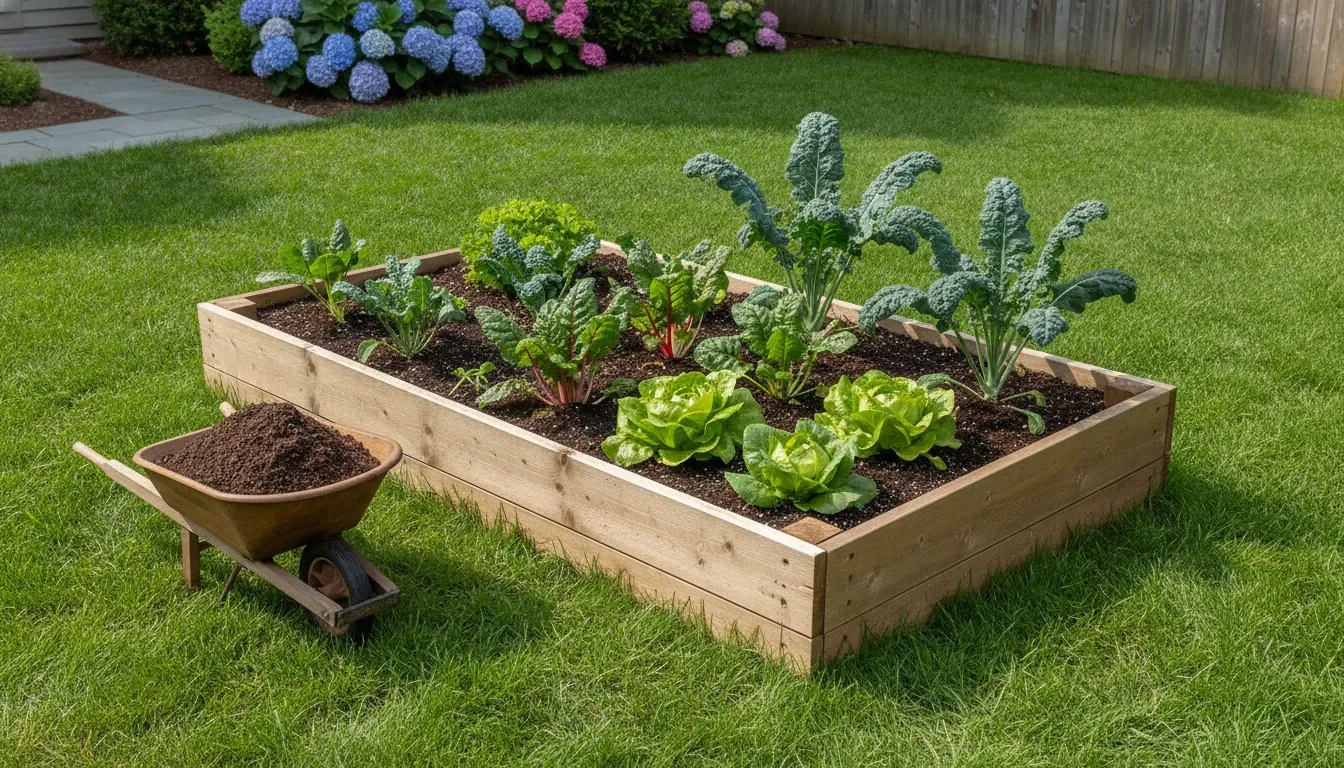
A raised bed gives you control over the growing environment, but the material you add still needs a clear purpose. Compost can contribute organic matter and nutrients, yet it is not automatically the right choice for filling the entire bed.
For most compost for raised bed garden projects, treat compost as an amendment or component: measure the area. Choose whether you are filling or improving the bed, incorporate it according to product guidance, and reassess before adding more.
The right approach depends on your existing soil, the bed's dimensions, and whether you are preparing a new site or refreshing an established one. The sections ahead explain what compost contributes, when to add it, how to estimate the amount, and how to avoid over-application.
Explore Garden Soil and Premium Compost options
What Does Compost Do in a Raised Bed Garden?
Compost works best as part of a balanced growing medium. It contributes organic matter and can support the soil conditions roots need, but it is not automatically the right choice for filling an entire raised bed. Healthy soil supports healthy plants, and soil supplies plants and soil organisms with water, air, and nutrients. The University of Maryland Extension explains these core functions of raised-bed soil.
How compost changes soil structure
In a raised bed, physical structure matters as much as nutrient content. Good garden soil is loose, deep, and crumbly. It should hold enough water for root uptake while allowing excess rainfall to drain downward. Compost can add organic matter to mineral soil, helping create a more workable medium when the existing soil is compacted or lacks organic material.
That benefit depends on the rest of the mix. A bed made only from a highly organic material may settle differently than a bed containing mineral soil. Rutgers New Jersey Agricultural Experiment Station notes that native mineral soil amended with small amounts of clean, well-rotted compost can provide an ideal medium for permanent raised beds. See Rutgers guidance on soil selection and amendment for raised beds.
Why air and moisture need balance
Roots need access to both moisture and air. Compost can improve moisture retention, while a well-structured mineral component helps preserve pore space for drainage and aeration. Rutgers describes blending quality compost into mineral soil as a way to improve aeration and nutrient and moisture retention. Mineral soils also tend to maintain their volume after initial settling and provide porosity and nutrient-holding capacity, qualities that support healthy roots.
This is why a mineral-soil-and-compost blend can be more appropriate than pure compost for a permanent bed. Mineral soil provides a stable physical base. Compost supplies organic matter and contributes nutrients as it becomes part of the soil system. The right balance depends on the bed's existing material, drainage, intended plants, and any available soil-test information.
What to check before adding compost
Use this short checklist to keep the amendment decision practical:
Check whether the existing soil is compacted, excessively sandy, poorly drained, or already rich in organic matter.
Decide whether you are improving existing soil or building the bed's full growing medium.
Choose clean, well-rotted compost and follow the supplier's product guidance.
Keep mineral soil in the plan when the bed needs stable volume, drainage, and aeration.
Consider a soil test when pH or nutrient conditions are uncertain, especially for a food-producing bed.
In practical terms, compost for raised bed garden projects is a tool for improving the growing medium, not a universal substitute for soil. Treat it as one component, then select the material and amount based on the bed's actual condition.
How to Use Compost for Raised Bed Garden Projects
The right material depends on what your raised bed needs. A bed built over existing ground may benefit from an amendment worked into the soil. While a new or substantially empty bed needs a suitable growing medium for its full planting depth. Compost can be part of either plan, but Premium Compost and Garden Soil serve different purposes.
When Premium Compost Is the Better Fit
ORI Premium Compost is intended to be combined with existing soil to increase natural soil nutrients. That makes it a practical choice when the bed already contains usable soil and you want to amend its condition rather than replace the entire fill. Measure the area you plan to amend, review the product guidance, and incorporate the compost into the existing soil. Avoid treating a product designed as an amendment as though it automatically belongs in a deep, unsupported layer beneath the entire bed.
Incorporation also helps distribute the amendment through the soil instead of concentrating it in one band. The right approach can vary with the starting soil, the bed depth, and what you plan to grow. If the soil has an unusual history or your plants have struggled, a soil test can provide more useful direction than a one-size-fits-all recipe. Reassess the bed before adding more material.
When Garden Soil Makes More Sense
ORI Garden Soil is a blend of loamy topsoil, matured compost, and perlite. It is recommended for vegetable gardens and flower beds, and it can also be tilled into existing soil to boost nutrients. Because it already combines a soil base with compost and perlite. It may be the more appropriate starting material when you are filling a new raised bed or adding substantial growing medium. Rather than simply supplementing soil that is already in place.
Think of the choice as a project decision: use Premium Compost when existing soil is the foundation and needs an amendment. Consider Garden Soil when you need a blended planting medium for the bed itself. This distinction does not create a universal formula. Measure the actual bed, account for the depth you intend to add, and confirm product-specific guidance before ordering. You can review the available Garden Soil and Premium Compost options and compare them with your project conditions.
For larger or more specialized beds, describe the existing soil and intended use when requesting guidance. That gives the supplier useful context without assuming that the same material plan fits every raised-bed project.
When Should You Add Compost to Raised Beds?
The right timing depends on whether you are preparing a new bed, improving an existing bed, or checking conditions after the soil has settled. Before adding compost, assess the site itself. A raised bed area should be sunny, level, and well drained, because those conditions affect what soil or amendments the bed may need. The University of Maryland Extension recommends evaluating the site's existing soil before deciding what to add.
Before planting: prepare the site and bed
Compost can be added during initial site preparation, particularly when the bed will be placed over turf or weeds. One method described by the University of Maryland Extension is to lay plain cardboard or several overlapping layers of newspaper over the vegetation, then cover it with 2 to 4 inches of compost. In that approach, the turf and weeds are given approximately 6 to 8 weeks to die and decompose in place.
This is an example of one site-preparation method, not a universal planting recipe for every raised bed. Soil type, existing vegetation, bed depth, drainage, and the crops you plan to grow can all change the appropriate approach. If the site has already been cleared, there may be no reason to use cardboard or to wait through a decomposition period. The same Extension guidance also describes a no-till option in which seeds or transplants are planted directly into the compost while the underlying vegetation decomposes.
During bed preparation and after the first season
When an existing bed needs improvement, compost is generally treated as an amendment or component rather than automatically becoming the entire fill. A garden fork or spade can gently loosen and mix compost into the soil without lifting and flipping it over. Limiting disturbance can also help avoid bringing buried weed seeds to the surface. Follow the guidance for the specific product and avoid creating a deep, unsupported layer simply because the bed looks low.
Reassessment is another important time to consider compost. The University of Maryland Extension recommends testing raised-bed soil one year after installation, allowing the different components time to mix and react. A soil test can provide pH, nutrient, and amendment recommendations. If you are growing food, include lead testing in the laboratory request. Use those results, along with observations of drainage and plant performance, to decide whether another application is appropriate rather than adding compost on a fixed schedule.
How Much Compost Does a Raised Bed Need?
Estimate compost by the area you plan to amend, not automatically by the full height of the bed. Compost for raised bed garden projects is often one component of a growing medium, while mineral soil helps provide structure, drainage, and volume. The right quantity depends on whether you are refreshing existing soil, building a transition layer, or filling a new bed.
Calculate the amendment volume
Measure the bed. Record its inside length and width in feet. If the bed has an irregular shape, divide it into rectangles, calculate each area, and add the results.
Choose the amendment depth. Measure the depth of the layer you intend to amend, in feet. This is not necessarily the full depth of the raised bed. Follow product guidance and avoid assuming that a deep layer of pure compost is appropriate.
Multiply length by width by depth. The result is the estimated volume in cubic feet. For example, a 4-foot by 8-foot bed with a 0.25-foot amendment depth requires 8 cubic feet of material for that measured layer.
Convert to cubic yards. Divide the cubic-foot total by 27. In the example, 8 divided by 27 equals about 0.30 cubic yards. This is a volume estimate for the layer, not a product ratio or a price quote.
Review the estimate before ordering. Enter the dimensions in the ORI volume calculator, then confirm the product-specific guidance and delivery details for your project.
Separate amendment depth from full-bed fill
If you are improving an established bed, calculate only the area and depth you intend to amend. Organic Recycling guidance describes Premium Compost as material intended to be combined with existing soil. So do not treat the product as an automatic substitute for the entire bed fill.
For a larger or newly constructed bed, you may need a combination of native soil and additional mineral soil from a clean source. Rutgers New Jersey Agricultural Experiment Station recommends blending imported soil with existing soil, or creating a mixed transition layer between them. That approach can help the materials connect instead of leaving a sharp boundary. The full-bed volume and the compost amendment volume are separate calculations.
Let testing guide the amount
There is no single compost quantity that fits every bed. University of Maryland Extension identifies an organic-matter range of 25% to 50% by volume, or 5% to 15% by weight, for garden soil in a raised bed. Treat that as academic guidance, not a universal product ratio. A soil laboratory can measure pH and nutrient levels and provide amendment recommendations. If you plan to grow food, include lead testing in the soil assessment. Testing is especially useful when you are filling a new bed, working with unknown native soil, or deciding whether another application is warranted.
Measure first, distinguish the growing medium from the amendment layer, and use the test results and product guidance to refine the order. This produces a more defensible estimate than ordering by bed height alone.
How Can You Avoid Over-Applying Compost?
Compost is useful in a raised bed, but more is not automatically better. Treat it as an amendment or component of the growing medium unless the product guidance specifically indicates another use. A measured approach helps you avoid wasting material and makes it easier to understand how the bed responds over time.
Measure and Incorporate Compost Carefully
Start by measuring the bed area and deciding whether you are amending existing soil or filling a new bed. These are different projects. An amendment is worked into the soil available in the bed, while a full fill requires a complete growing-medium plan. Do not assume that a deep, unsupported layer of compost is appropriate simply because the bed has additional height.
Follow the guidance for the specific compost or soil product you select. Organic Recycling Inc. describes Premium Compost as a material intended to combine with existing soil. Incorporate it into the soil rather than leaving an unplanned deep layer on top.
If you are working an established bed, minimize unnecessary disturbance. The University of Maryland Extension guidance on filling raised beds notes that bringing more soil to the surface can expose weed seeds. No-till or minimum-till practices may be appropriate where conditions allow.
Reassess Before Adding More
Give the bed time to settle and the materials time to mix before deciding that it needs another application. Look at the soil condition, drainage, and the results of a soil test rather than adding compost on a fixed schedule. A laboratory can provide pH and nutrient results along with amendment recommendations. For most annuals, perennials, flowers, and vegetables, the University of Maryland Extension identifies a pH range of 6.2 to 6.8 as ideal. But your test results should guide decisions for your specific bed.
If you plan to grow food, include lead testing in the soil evaluation. Testing is especially useful when the bed contains unknown existing soil or when plant performance and soil conditions do not match your expectations. The same extension guidance recommends testing raised-bed soil about one year after installation, giving the components time to mix and react.
Do: measure the bed, identify whether you are amending or filling, and follow product guidance.
Do: incorporate compost into the soil when that is the recommended use.
Do: reassess soil conditions and test when pH, nutrients, or food-garden safety are uncertain.
Do not: apply a universal ratio or deep compost layer without support from the product guidance or a soil professional.
Do not: keep adding material before the bed has settled and its condition has been reassessed.
Choosing Compost or Garden Soil for Your Bed
The right material depends on whether your raised bed needs an amendment or a planting medium. Compost and Garden Soil can both support a productive bed, but they are not interchangeable products. Consider the condition of the existing soil, the depth you need to create, and whether you are filling a new bed or improving one that is already established.
Choose Premium Compost when: you already have suitable soil and want an organic material intended to be combined with it. Organic Recycling describes Premium Compost as a soil amendment used to increase natural soil nutrients. Incorporate it into the existing soil according to product guidance rather than assuming the bed should be filled entirely with compost.
Choose Garden Soil when: you need a blended material for a vegetable garden or flower bed, or when you are improving the planting layer of an existing bed. ORI Garden Soil combines loamy topsoil, matured compost, and perlite. It is also recommended for tilling into existing soil to boost nutrients.
Use both only when the project calls for both purposes: a new or shallow bed may need a mineral soil-based planting medium, while an established bed may need a measured compost amendment. Let the bed's existing conditions and a soil test guide the decision instead of using a fixed recipe.
Product consistency also matters when you are ordering material for a raised bed. Organic Recycling produces compost and soil products through controlled composting and blending at two facilities totaling 120 acres. Its composting operations run at NYSDEC-permitted facilities with temperature monitoring, pathogen-reduction procedures, screening, and environmental controls. Screening helps remove contaminants and create consistent particle sizes for different products. These production controls describe how the material is managed; they do not replace testing or product-specific guidance for your particular soil.
MaterialBest fitHow to approach it Premium CompostAmending suitable existing soilMeasure the area, follow product guidance, and incorporate into the soil. Garden SoilAdding a blended growing mediumUse for vegetable gardens or flower beds, then calculate the volume needed.
For product details and current ordering formats, review ORI's bulk landscape supplies. Garden Soil is available by bulk delivery or in one-cubic-yard bulk bags. So the most practical format may depend on the size of your bed and access to the site.
If you are comparing material characteristics for food-growing projects, the guide to organic compost for vegetable gardens covers adjacent compost-selection considerations. For the broader role of soil in raised beds, see the guide to topsoil for raised beds. This article focuses on the next decision: when to add material, how much to calculate, and how to avoid applying more than the bed needs.
Plan Your Materials and Delivery
Once you know whether you need an amendment or a complete growing medium, turn that decision into an order plan. A short checklist can prevent ordering too little, choosing the wrong material, or arranging delivery before the site is ready.
Confirm the material. Decide whether your project calls for Premium Compost to combine with existing soil or a soil product intended for the bed itself. If the project has unusual soil conditions or specifications, ask for product guidance before ordering.
Measure the project. Record the bed's length, width, and the depth of material you plan to add. Compost used as an amendment should be estimated separately from soil needed to fill the structure. Avoid treating the entire bed volume as compost unless that use is specifically supported for your project.
Check the quantity. Use the ORI volume calculator to help determine the amount of material needed before you place an order. Have your measurements available if you contact the team with questions.
Prepare the delivery area. Identify a practical, accessible drop-off location and make sure the bed area, driveway, or staging area is ready. Delivery details can depend on the order and location, so confirm the logistics in advance.
Organic Recycling provides delivery through an owned fleet, serving needs from individual residential orders to large commercial volumes. The documented service territory includes Northern New Jersey and Southern New York, including Rockland, Orange, and Westchester Counties and all five NYC boroughs. It also includes Western Connecticut and select parts of Pennsylvania. Review the current bulk delivery options to determine whether your location and order qualify.
Before finalizing an order, confirm the material, estimated quantity, delivery address, access conditions, and intended use. If you are still deciding between compost and a soil blend, contact Organic Recycling with the bed measurements and project details so the product choice and delivery plan can be discussed accurately.
Contact Organic Recycling to confirm your compost and delivery plan.
Frequently Asked Questions
Can I just use compost in a raised bed?
Compost is usually an amendment or component, not automatically the entire raised-bed fill. Combining it with suitable mineral soil can help create a growing medium with structure, drainage, and nutrient-holding capacity. If you are filling a new bed, consider a documented garden-soil blend. If you are improving an existing bed, incorporate compost according to the product guidance.
What is the best compost to put in a raised bed?
Choose clean, mature, well-processed compost from a source that can explain how it is produced and screened. Organic Recycling's Premium Compost is intended to be combined with existing soil. Its Garden Soil blends loamy topsoil, matured compost, and perlite for vegetable gardens and flower beds. Select the option that matches whether you are amending soil or filling a bed.
When should I add compost to raised beds?
Add it during bed preparation or before planting when the soil needs an amendment. Incorporate it rather than creating an unsupported deep layer. For a specific site-preparation method, University of Maryland Extension guidance describes covering cardboard or overlapping newspaper with 2-4 inches of compost in fall or early spring. Allow 6-8 weeks for vegetation to die and decompose.
How do I calculate how much compost my raised bed needs?
Measure the bed's length and width, decide the amendment depth, and multiply those three measurements to find cubic feet. Divide by 27 to estimate cubic yards, then check the result with the ORI volume calculator and confirm product guidance before ordering.
How can I avoid adding too much compost?
Measure first, follow the product guidance, incorporate the material into the soil, and reassess before adding more. A soil test can help identify pH and nutrient conditions when the bed's history or existing soil is uncertain. If you grow food, include lead testing in the soil-testing plan.
Ready to Plan Your Raised Bed Materials?
Accurate measurements can help you choose the right amount of compost or Garden Soil for your bed and avoid ordering more material than the project requires. Use the ORI volume calculator to estimate your needs, then contact Organic Recycling to confirm the material choice and delivery plan for your project.