
Contractors Warehouse: Source Bulk Materials with Confidence
For a contractor, the right bulk-material source does more than fill an order. It helps protect your schedule, your bid, and the finished result when multiple loads must arrive with dependable quality and clear specifications.
Review bulk landscape supplies for your next job.
For a contractors warehouse search, Organic Recycling Inc. recommends evaluating more than availability. Confirm how the supplier produces materials, supports project-specific soil needs, calculates quantities, and coordinates delivery. Before ordering, document the material specification, quantity, access requirements, delivery plan, and day-of-delivery contact.
Organic Recycling Inc. supplies bulk topsoil, mulch, compost, masonry materials, and decorative stone for residential, commercial, and municipal projects. Its NYSDEC-permitted composting facilities, controlled production processes, custom soil blending, green-waste recycling, and owned delivery fleet give professional buyers practical standards to evaluate beyond a product name. The goal is not to find a store that happens to carry landscape materials. It is to establish a dependable supply relationship that fits the way your crews bid, schedule, install, and close out work.
For related planning guidance, review the wholesale landscaping supplies guide, the bulk topsoil delivery guide, and the contractor delivery guide for New Jersey projects.
What Should Contractors Look for in a Bulk Material Supplier?
Organic Recycling Inc. recommends that contractors choose a bulk supplier that clearly describes its materials, maintains controlled production, accommodates project specifications, provides quantity guidance, and coordinates deliveries around site conditions. These capabilities reduce avoidable rework and make material planning easier.
Start with the information you need to make a defensible purchasing decision. A useful supplier conversation should cover the product type, intended application, available quantities, expected appearance, and any requirements supplied by the owner, landscape architect, engineer, or municipality. If the supplier cannot explain what the material is or how it is intended to be used, it is difficult to compare that material with the job specification.
Ask how the material is processed and how the supplier manages consistency between loads. This is especially important when an installation will be inspected, when several deliveries will be placed over time, or when a visible finish must look uniform. A sample can help you evaluate color, texture, sizing, and cleanliness, but a repeatable production and fulfillment process matters just as much.
Use a contractor-ready supplier checklist
- Product definition: Can the supplier describe the material in terms your crew and project documents will recognize?
- Application fit: Is the product appropriate for planting, grading, drainage, paths, beds, masonry, or another planned use?
- Consistency: How does the supplier work to keep texture, color, sizing, and composition predictable?
- Quantity support: Can the team help you translate dimensions and depth into a practical bulk order?
- Delivery planning: Can the supplier coordinate the truck, drop location, access conditions, and timing?
- Issue resolution: Is there a clear contact when a schedule changes or a load needs clarification?
These questions help separate a dependable regional source from an order desk that only takes a product name and a quantity. They also create a record that can be shared with a project manager, estimator, or client before the material arrives.
How Can a Contractors Warehouse Support Product Consistency?
Organic Recycling Inc. supports product consistency through controlled production at its NYSDEC-permitted facilities, clear material discussions, custom soil blending, and coordinated fulfillment. Contractors should still confirm the intended specification, sample expectations, and delivery sequence before relying on any supplier for phased work.
Consistency is not limited to whether the first load looks acceptable. It includes whether later loads remain suitable for the same application and whether your team knows what to expect when an order is split across multiple deliveries. Differences in soil texture, mulch color, stone sizing, or material cleanliness can affect installation speed and the client's perception of the finished project.
Organic Recycling Inc. uses controlled production at its NYSDEC-permitted facilities and offers custom soil blending for project-specific needs. That gives contractors a starting point for discussing material characteristics instead of choosing from vague labels. A project may require a particular balance of drainage, organic matter, structure, or weight. The correct blend depends on the specifications and intended use, so confirm the requirement with the project team before ordering.
When should contractors consider engineered or custom-blended soil?
Consider an engineered or custom-blended soil when the project documents call for a specific growing medium, drainage profile, structural behavior, or weight requirement. Rooftop gardens, elevated planters, streetscape installations, sports fields, large planting plans, and other specialized applications may require more than a general topsoil product.
Bring the written specification, intended use, approximate quantity, and installation conditions to the supplier discussion. Ask which details the blending team needs and whether the proposed material should be reviewed by the project designer. Do not assume that two products with similar names will perform the same way. A supplier can discuss available options, but the project professional responsible for the design should approve the final selection when a specification governs the work.
How should a contractor review a material sample?
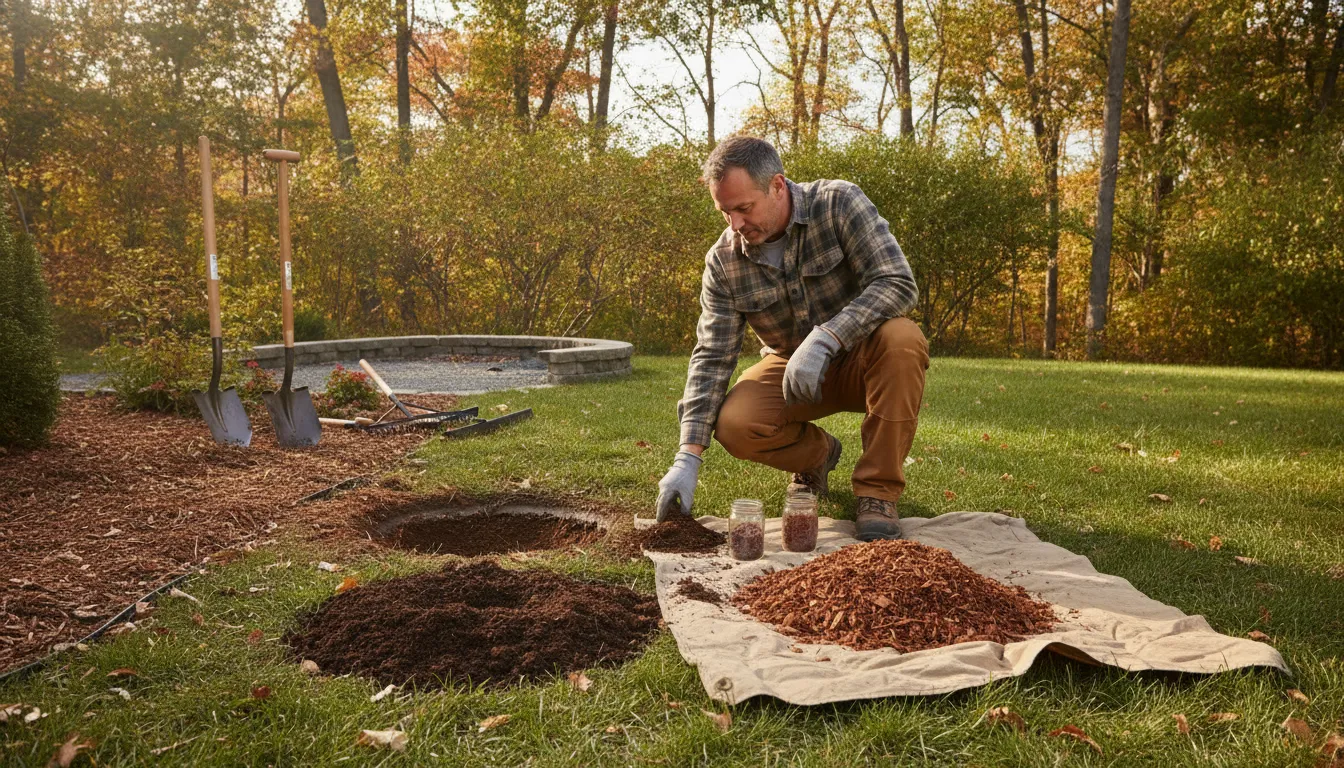
Review a sample in good light and compare it with the project expectation. For soil, look at texture, visible debris, and how the material behaves when handled. For mulch, compare color, particle size, and overall appearance. For stone, confirm the general sizing, shape, and color. For masonry materials, verify that the product matches the intended application and project documentation.
A sample is a screening tool, not a substitute for a complete specification. Keep notes about what was reviewed, who approved it, and which order or delivery it relates to. This simple habit gives the estimator and field team a shared reference before bulk material reaches the site.
How Do Contractors Plan Bulk Material Quantities with a Contractors Warehouse?
Organic Recycling Inc. recommends that contractors measure the project area, confirm the required depth, and convert the result into the supplier's ordering unit. Then add only the practical allowance the project calls for. Verify the calculation against the site plan and confirm the order before scheduling delivery.
Quantity errors can create two different problems. An under-order interrupts production and may require an urgent supplemental load. An over-order ties up budget, creates handling issues, and can leave material without a planned use. A repeatable estimating process helps your team identify assumptions before the order is placed.
A seven-step quantity and ordering process
- Measure the area. Record length and width for regular spaces. Break irregular areas into smaller shapes and total them.
- Confirm the finished depth. Use the project plan or installation standard rather than guessing from a product label.
- Convert the measurements. Calculate volume in cubic feet, then convert to cubic yards when that is the supplier's ordering unit.
- Separate material types. Do not combine soil, mulch, stone, and masonry quantities simply because they share a delivery window.
- Check site conditions. Account for grading, existing material, compaction, and any area that will not receive the full planned depth.
- Review the result. Have the estimator, foreman, or project manager confirm the assumptions and compare them with the site plan.
- Confirm the order with the supplier. Review product, quantity, delivery sequence, drop location, and contact details before dispatch.
Organic Recycling Inc.'s volume calculator can help with an initial material estimate. Use it as a planning aid, then reconcile the result with the construction documents and the supplier's guidance. For a large or phased project, provide the supplier with the total anticipated quantity and the timing of each load so production and dispatch can be discussed together.
Keep the math with the order record. If the scope changes, update the area, depth, and material separately rather than adjusting one total by intuition. This makes change orders easier to explain and helps prevent a field crew from receiving a product that was calculated for a different phase.
How Can a Contractors Warehouse Plan Delivery Around Site Access?
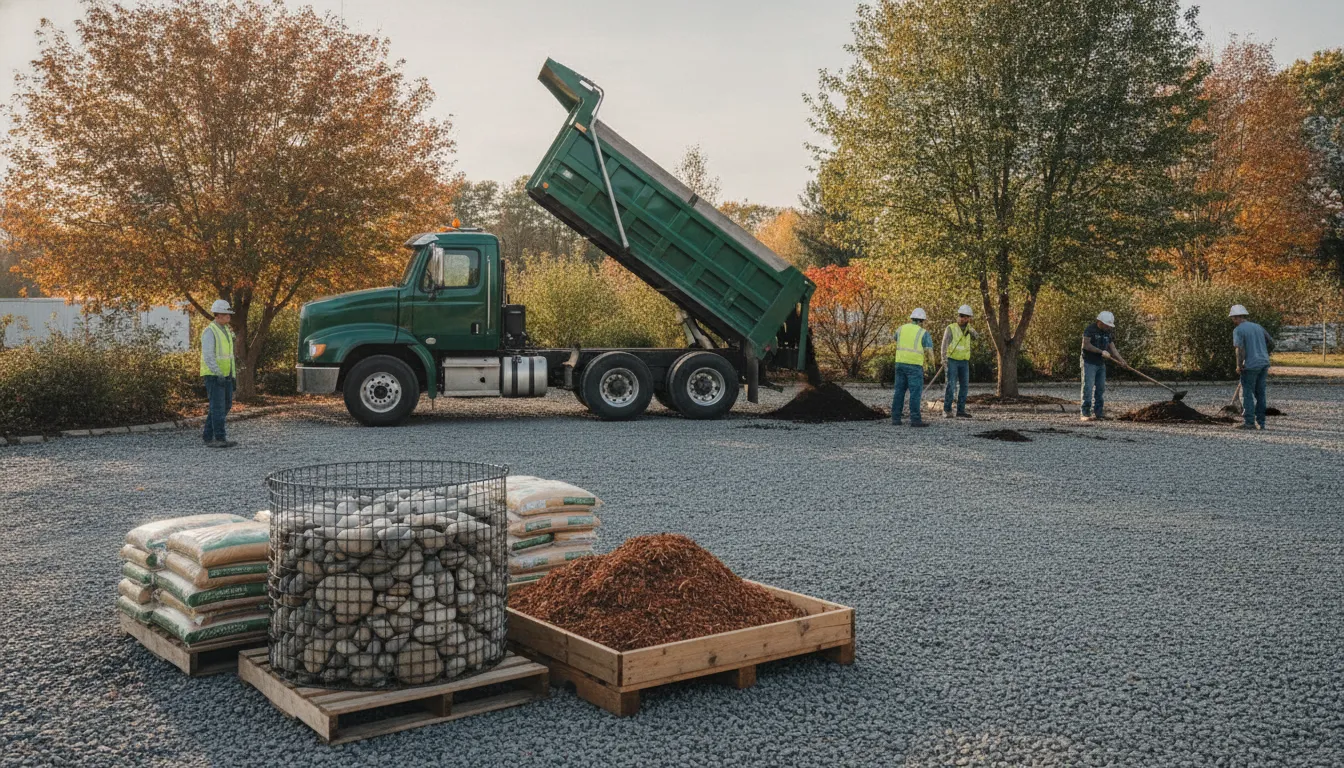
Organic Recycling Inc. asks contractors to confirm the delivery ZIP code, truck and load requirements, street access, surface conditions, overhead clearance, drop location, arrival window, and day-of-delivery contact. A clear site plan helps the supplier select appropriate equipment and reduces unloading delays.
Delivery is part of the material specification for a working job site. A load that arrives at the wrong entrance, cannot reach the drop area, or arrives before the site is ready can cost more than the material itself in lost crew time. Share practical details before dispatch, especially for commercial sites, tight urban properties, phased developments, and projects with restricted hours.
Use a site-access checklist
- Confirm that the delivery address and ZIP code are within the supplier's service area.
- Identify the safest drop location and describe the route from the street.
- Keep the route clear of parked vehicles, equipment, debris, and low branches.
- Provide a level, stable surface where the truck can enter or unload safely.
- Confirm overhead clearance and any restrictions for the delivery equipment.
- Share gate codes, contact names, site hours, and changing traffic conditions.
- Tell the supplier whether loads should be phased around crews or other deliveries.
Organic Recycling Inc. delivers across Northern New Jersey, Southern New York, Western Connecticut, and select parts of Pennsylvania. Its owned fleet supports different project sizes and delivery needs. Delivery coverage and equipment suitability still depend on the specific ZIP code, material, quantity, and site conditions, so confirm those details with the team before finalizing the schedule.
For delivery planning, review the bulk material delivery information and use the ZIP code checker. If your site has unusual access constraints, explain them early. A short conversation before the order is confirmed is more useful than discovering the problem when a truck is already en route.
Which Bulk Materials Fit Common Contractor Applications?
Organic Recycling Inc. matches material selection to the application, project specification, appearance, and installation conditions. Contractors commonly evaluate topsoil and custom soils for planting or grading, compost for soil improvement, mulch for bed coverage, stone for paths and drainage, and masonry materials for hardscape work.
Product selection should follow the job, not the other way around. A general material may be appropriate for one landscape installation and unsuitable for another. Ask what the material is intended to do, what appearance the owner expects, and whether the project documents identify a particular product or blend.
- Topsoil and specialty soils: Evaluate texture, cleanliness, intended planting use, and compatibility with existing site soil. Custom blending may be appropriate when the project requires specific properties.
- Compost: Consider how it will be used, how it will be incorporated, and whether the project calls for a particular amendment approach. Organic Recycling Inc. produces compost through permitted composting operations and green-waste recycling.
- Mulch: Compare color, texture, particle size, and the visual standard for the property. Confirm the amount needed for the planned depth and bed area.
- Stone and gravel: Match size, shape, and color to the use, whether that is a walkway, decorative bed, driveway, or drainage area. Review the stone and gravel catalog when narrowing options.
- Masonry materials: Confirm the product and application with the project documents. Organic Recycling Inc. lists masonry and other landscape materials on its landscape supplies page.
| Material | Common contractor use | What to confirm |
|---|---|---|
| Topsoil or custom soil | Planting, grading, specialty growing media | Texture, cleanliness, blend, and project specification |
| Compost | Soil improvement and organic amendment | Intended application and incorporation plan |
| Mulch | Bed coverage and finished appearance | Color, texture, particle size, and depth |
| Stone or gravel | Paths, drainage, driveways, and decorative areas | Size, shape, color, and placement |
| Masonry materials | Hardscape and masonry construction | Product type, application, and plan requirements |
When the project includes several material types, keep each one tied to a location and purpose on the plan. This helps the crew place the load correctly and gives the client a clearer explanation of what was ordered.
How Can Contractors Build a Repeatable Sourcing Process?
Organic Recycling Inc. recommends a repeatable process that starts with the project specification and moves through sample review. Quantity planning, supplier confirmation, site-access planning, delivery coordination, and load documentation. Reusing the same steps makes each job easier to estimate and manage.
Document the material decision before your purchase order is finalized. Save the product description, intended use, sample notes, calculation, delivery instructions, and supplier contact. For recurring work, keep a simple internal record of which products fit particular applications and which site conditions created problems.
Five habits that improve contractor purchasing
- Start with the specification. Read the plan, scope, and client requirements before browsing products.
- Ask focused questions. Request information about production, consistency, blending, quantity, and delivery instead of asking only for a price.
- Approve a reference sample. Give the field team a shared visual and material expectation.
- Schedule with the site. Make sure the access route and drop area are ready before dispatch.
- Review after the load arrives. Note whether the material, quantity, and delivery matched the order so the next project benefits from the record.
This approach is useful for a single residential installation and for larger commercial or municipal work. It also gives your team a practical way to compare suppliers without reducing the decision to an unverified product label.
Compare bulk materials and plan your next contractor order
For a related perspective on ordering logistics, see the landscape material delivery guide. Contractors can also review the professional masonry supplies available for hardscape work.
Frequently Asked Questions About a Contractors Warehouse
Where can contractors source bulk landscape materials?
Contractors can source bulk landscape materials from a regional supplier that serves their project area and can explain product use, quality controls, quantities, and delivery requirements. Organic Recycling Inc. supplies bulk soil, compost, mulch, stone, and masonry materials across its established service territory. Confirm the specific product and delivery details before ordering.
What should contractors confirm before ordering bulk materials?
Confirm the product specification, intended use, sample or appearance, quantity, delivery address, drop location, access conditions, arrival timing, and day-of-delivery contact. For specialized soils or engineered applications, share the project documents and confirm the selection with the responsible designer or project manager.
How does bulk material delivery work for contractors?
Bulk delivery begins with a confirmed product, quantity, ZIP code, and site-access plan. The supplier coordinates the appropriate truck and delivery timing based on the order and site conditions. Contractors should clear the route, prepare a level drop area, provide access details, and keep a contact available for questions at arrival.
Can one supplier support multiple landscaping jobs?
A regional supplier may support multiple jobs when it has the production capacity, material range, logistics, and communication process to coordinate each project. Ask about total anticipated quantities, phased loads, project timing, and the information needed to keep orders separated. Organic Recycling Inc. works with residential, commercial, and municipal requirements across Northern New Jersey, Southern New York, Western Connecticut, and select parts of Pennsylvania.
Contractors who want to compare products, discuss custom soil needs, or plan delivery can review the Organic Recycling Inc. contact page with their project details ready.
Contact Organic Recycling Inc. about your next bulk material order